
Choosing a reliable Hot Melt Coating Machine manufacturer in China requires more than comparing prices or catalog photographs. Production teams must examine coating width, melting capacity, line speed, temperature control, and material compatibility. These details directly affect adhesive stability, coating uniformity, and daily operating costs.
Details matter.
This guide introduces ten notable Chinese manufacturers for buyers evaluating industrial coating equipment. The selection considers manufacturing experience, engineering capability, product documentation, customization support, and after-sales responsiveness. It also encourages readers to verify certifications, factory records, testing procedures, and installation services independently. A machine that performs well in a demonstration may behave differently under continuous production, changing adhesive viscosity, or demanding substrate conditions. Practical questions deserve clear answers. Can the supplier provide sample coating trials? Are spare parts available quickly? Does the control system offer stable temperature monitoring and usable alarms? These factors often matter more than polished marketing language.
No ranking is perfect.
Supplier capabilities can change with new equipment, management decisions, or market conditions. Some manufacturers may have limited public information, so buyers should request current technical data and customer references. Experienced purchasers should also compare total ownership costs, operator training, maintenance access, energy use, and delivery support. This introduction provides a practical framework for exploring China’s top Hot Melt Coating Machine manufacturers. It is not a substitute for technical audits or contract review. Careful verification remains essential.
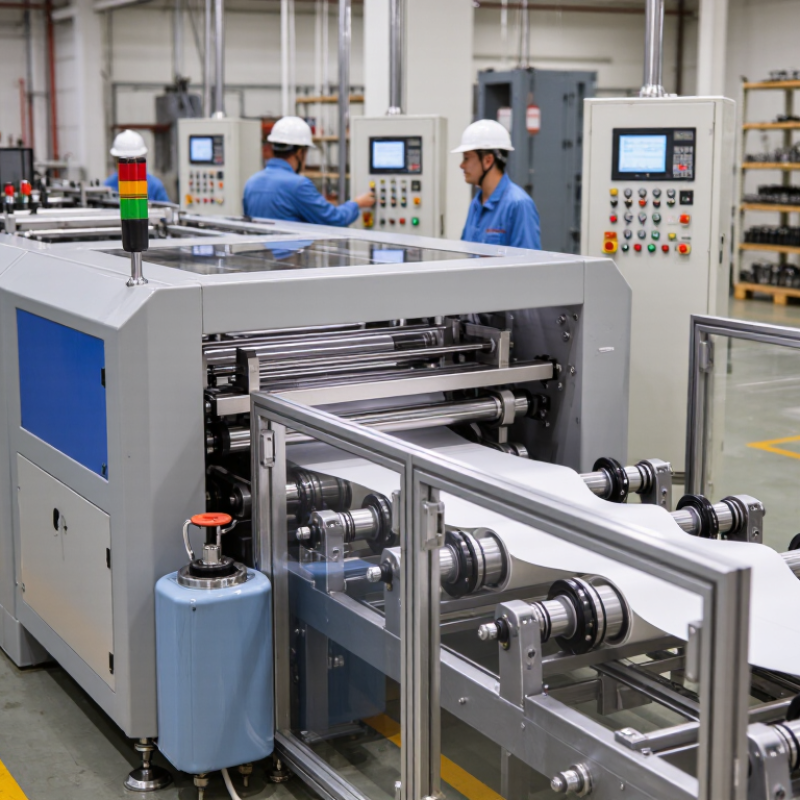
Hot melt coating machines apply adhesive without solvents.
They heat solid adhesive pellets until the material becomes a controlled liquid. A heated tank, pump, hose, and coating head then move the adhesive onto a web. The web may be paper, film, foil, fabric, or nonwoven material.
Slot-die systems usually create a precise layer. Roller systems can handle broader coating conditions.
Temperature control is critical. Many thermoplastic adhesives operate between 100°C and 200°C, depending on formulation. The pump regulates flow, while the coating gap controls weight and thickness. A cooling roller can solidify the layer within seconds.
According to Grand View Research, the global hot melt adhesives market was valued at about USD 10 billion in 2023. It is forecast to grow at roughly 6% annually through 2030.
This growth supports demand for accurate coating equipment, but adhesive sales do not measure machine quality directly.
Machine selection should consider line speed, coating width, adhesive viscosity, and substrate sensitivity. A stable system can reduce stringing, uneven edges, and excess adhesive.
The Smithers packaging research also identifies lightweight materials and higher production efficiency as continuing industry priorities.
In practice, operators still face blocked nozzles and thermal drift. Small errors matter. Regular temperature checks and coating-weight tests remain necessary. I would not trust a specification sheet alone. Factory trials often reveal problems that laboratory data misses.
Evaluating China’s hot melt coating machine manufacturers requires more than comparing online prices. Start with the machine’s working range. Check coating width, line speed, coating weight, adhesive viscosity, and temperature stability. Ask for test data from materials similar to yours. A machine designed for narrow labels may not handle wide industrial films reliably.
Request a factory audit, live video inspection, or production-site reference. Examine the unwinding system, heating zones, slot die, laminating rollers, and web tension controls. Look for clean wiring, guarded moving parts, accessible maintenance points, and clear alarm displays. Ask how the manufacturer calibrates temperature sensors and controls coating thickness. Small deviations can create visible stripes, weak bonding, or wasted rolls. Run a trial.
A reliable supplier should provide drawings, electrical standards, spare-parts lists, manuals, and operator training. Confirm installation support, response times, warranty coverage, and remote troubleshooting procedures. Compare the total cost, not only the quotation. Energy use, adhesive waste, replacement parts, and downtime can change the calculation. No scorecard is perfect. A polished factory can still miss deadlines, while a smaller workshop may offer stronger technical attention. Verify claims with sample runs, signed specifications, and customer references. Trust evidence, but keep questioning it.
China’s top ten hot melt coating machine manufacturers are best judged by engineering depth, not advertising language. The strongest suppliers usually develop equipment for adhesive films, labels, tapes, medical materials, and protective laminates. Their product ranges often include slot-die, roll, and multi-station coating systems.
A capable manufacturer should control coating width, web tension, adhesive temperature, and line speed with stable feedback. Some leading Chinese factories provide machines from 300 to 2,000 millimeters wide, with several heated zones and automatic edge adjustment.
Practical buyers should inspect coat-weight accuracy, melt-pump response, unwinding control, and cooling-roll performance. Small details matter. A clean nozzle matters.
The top ten suppliers also differ in service quality. Reliable teams offer factory testing, installation guidance, operator training, and accessible spare parts. Ask for production samples using a similar adhesive and substrate. Request records for temperature stability and coating uniformity.
However, no manufacturer is perfect. A supplier may build a precise coating head but provide weak documentation. Another may offer fast commissioning but limited customization. I would compare reference projects, electrical standards, maintenance access, and after-sales response before choosing.
A factory visit can reveal more than a polished brochure, especially around assembly discipline, calibration tools, and final inspection routines.
Hot melt coating equipment applies molten adhesive without evaporation solvents. Its core system includes a heated tank, precision gear pump, slot die, and cooling rollers. Temperature control must remain stable across the coating head. A small fluctuation can create streaks, bubbles, or uneven adhesive weight. Web tension also matters. Loose material wrinkles quickly.
Modern machines use closed-loop sensors to monitor coating thickness and line speed. Automatic edge control reduces waste during continuous production. Some systems combine silicone release liners with multilayer coating units. These configurations support labels, medical tapes, hygiene products, packaging films, and construction membranes. Each application needs different melting temperatures, viscosity ranges, and coating weights. A machine for delicate film should not be selected like one for heavy industrial fabric.
Experienced engineers usually test the adhesive on the actual substrate before final installation. They check startup time, pump accuracy, cleaning access, and emergency shutdown performance. Solvent-free operation can reduce emissions, but it does not remove every production risk. Poor ventilation around heated components still causes discomfort. No machine is perfect. I have found that simple temperature records often reveal more than attractive specifications. Buyers should also inspect spare-part availability, operator training, and long-term calibration support. A fast line is useful only when its coating remains consistent.
Choosing a reliable Chinese hot melt coating machine supplier requires more than comparing online prices. Start with your product requirements: coating width, line speed, adhesive viscosity, heating temperature, and web tension. A professional supplier should explain how each specification affects coating weight and production stability. Ask for layout drawings, electrical standards, heating-zone details, and recent factory references. Clear answers matter.
Request a material trial before signing a purchase agreement. Send your actual film, foil, paper, or fabric, then inspect coating uniformity under working conditions. Check edge control, temperature recovery, adhesive consumption, and cleaning time. Ask whether critical parts are available locally and how quickly technicians respond. A supplier with documented testing records appears more reliable than one offering only attractive photographs. Still, no checklist is perfect. Your team must verify claims.
Tips: Visit the factory if possible. Observe assembly quality, cable labeling, safety guards, and machine testing. Ask operators about common failures, not just sales staff. Review the warranty in writing, including travel costs and response times. Confirm installation training, spare-part lists, and remote support. One practical mistake is focusing only on machine speed. Stable coating quality, easy maintenance, and consistent temperature control usually protect long-term production better. You may also request references from users with similar adhesive materials and daily output.