
China Top 10 Pool Motor Manufacturers for Global Buyers
Selecting a reliable pool motor manufacturer can shape a swimming pool’s efficiency, noise level, and maintenance costs. Global buyers often compare more than price. They examine motor power, voltage options, insulation ratings, corrosion resistance, warranty terms, and replacement support.
This guide reviews China’s top 10 pool motor manufacturers through a practical purchasing lens. It considers product experience, manufacturing capability, export knowledge, quality systems, and communication standards. Factory history matters, but it should not replace current evidence. A supplier may have impressive facilities and still provide unclear testing records. That deserves attention.
Look for motors tested under realistic conditions, including continuous operation, high humidity, and unstable outdoor temperatures. Details such as sealed bearings, thermal protection, and compatible pump connections can affect service life. Ask for datasheets, efficiency figures, certification documents, and sample performance before placing a large order. Small details matter.
The manufacturers discussed here serve different buyer needs. Some focus on cost-effective residential equipment. Others support commercial pools, water features, or customized electrical requirements. Their strengths may vary by market, order quantity, and after-sales capacity. A strong supplier should explain limitations honestly, not only present polished product photos.
This is not a perfect ranking. Supplier information can change. Independent verification remains necessary. Buyers should confirm applicable standards, delivery terms, installation requirements, and local service arrangements. With careful comparison, this list can help importers, distributors, contractors, and project owners identify a suitable pool motor partner in China.
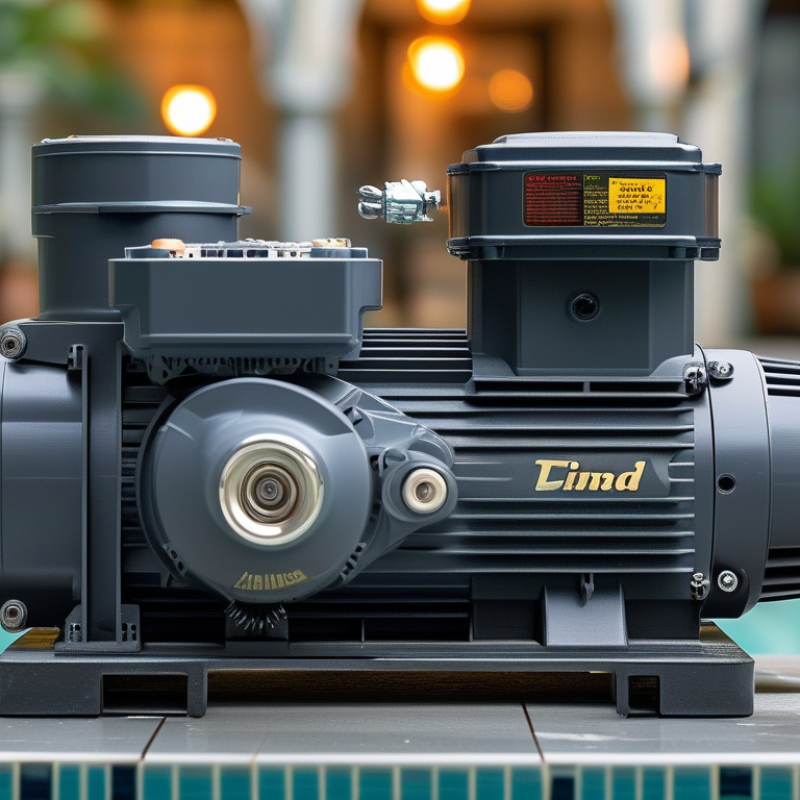
What Defines a Reliable Pool Motor Manufacturer in China
When comparing China’s top ten pool motor manufacturers, reliability matters more than catalog size. A trustworthy supplier proves performance under heat, moisture, long operating cycles, and unstable site conditions.
A qualified factory should provide motor curves, rated flow, head pressure, insulation class, noise data, and energy figures. Ask for records from winding checks, waterproof inspections, vibration testing, and continuous-load trials. Strong manufacturers explain copper quality, bearing selection, shaft materials, and sealing structures clearly. They should also maintain traceable production records and final performance checks. In real projects, technical response speed matters. A precise answer often means stronger engineering support than the lowest quotation. However, documents alone are not proof. I have seen impressive samples work well, while later batches produced inconsistent noise and heat.
Tips: Request a sample and test it with your actual pipe length, water temperature, voltage, and daily runtime. Compare current, sound, flow, and motor temperature. Check spare-part availability and warranty procedures before ordering. Ask for a corrective-action report when defects appear. Good manufacturers accept uncomfortable questions.
A dependable supplier should support customization without weakening safety controls. Confirm production capacity, inspection responsibility, packaging protection, and change-management procedures. Small details matter, especially terminal sealing and carton impact resistance. Production can look excellent, yet communication may still fail during urgent changes. That risk deserves honest attention.
China Top 10 Pool Motor Manufacturers for Global Buyers - What Defines a Reliable Pool Motor Manufacturer in China
| No. | Evaluation Dimension | Reliable Reference Benchmark | Evidence Global Buyers Should Request | Why It Matters |
|---|---|---|---|---|
| 1 | Applicable Safety Standards | Design and production aligned with IEC 60034 requirements for rotating electrical machines, where applicable. | Current test reports, product compliance files, and the exact model numbers covered by each report. | Standards-based testing helps verify electrical, thermal, mechanical, and operating safety. |
| 2 | Ingress Protection | IP55 is a common minimum reference for many enclosed motor applications; the required rating depends on installation conditions. | An IP test report stating the enclosure rating under IEC 60529 or the applicable local standard. | A suitable enclosure helps protect the motor from dust and water exposure around pool equipment rooms. |
| 3 | Energy Efficiency | IE3 or higher efficiency is a useful benchmark where the motor, rated output, and local regulations support that classification. | Efficiency test data at the stated rated load, speed, voltage, and frequency, with the applicable efficiency-class standard. | Higher efficiency can reduce operating electricity consumption over the motor’s service life. |
| 4 | Electrical Compatibility | Clearly specified voltage, phase, frequency, current, rotation, and connection configuration for the destination market. | A complete nameplate drawing, wiring diagram, technical datasheet, and sample inspection record. | Correct electrical matching reduces installation errors, overheating risks, and premature failures. |
| 5 | Thermal Protection | A suitable motor protection method, such as an integrated thermal protector or correctly specified external overload protection. | Protection-circuit description, trip characteristics, reset method, and operating-temperature limits. | Thermal protection helps limit damage caused by overload, blocked airflow, abnormal voltage, or high ambient temperature. |
| 6 | Insulation and Temperature Class | Class F insulation is widely used in industrial motors; the permitted temperature rise must be verified from the datasheet. | Insulation-class declaration, temperature-rise test results, and winding-material specifications. | Appropriate insulation performance supports reliable operation under continuous-duty conditions. |
| 7 | Hydraulic and Motor Performance Data | Published performance curves showing flow, head, power input, efficiency, and operating limits for each pump-motor assembly. | Factory performance curves, test-point records, tolerance information, and the test method used. | Verified curves allow buyers to match the equipment with the required pool circulation duty. |
| 8 | Materials and Corrosion Resistance | Material selection should match chlorinated water exposure, humidity, temperature, and the pump’s wetted-part requirements. | Material declarations for the shaft, seals, housing, fasteners, impeller, and other wetted components. | Suitable materials help reduce corrosion, leakage, contamination, and maintenance frequency. |
| 9 | Quality Control and Traceability | Documented incoming-material inspection, in-process checks, final testing, and batch or serial-number traceability. | Quality-control plan, sample inspection report, calibration records, and traceability procedure. | Consistent process control is more reliable than relying only on visual inspection or marketing claims. |
| 10 | Export Support and After-Sales Service | Clear warranty terms, spare-parts availability, installation documentation, response procedures, and destination-market compliance support. | Written warranty conditions, spare-parts list, service response process, packaging specifications, and shipping documentation. | Strong technical support lowers downtime and simplifies installation, troubleshooting, and future replacement. |
Note: The benchmarks above are general purchasing references. The required specification should always be confirmed against the motor’s rated output, installation environment, destination-country regulations, and complete pump system design.
Related Posts
-
Exploring the Essential Role of Pool Motors in Maintaining Crystal-Clear Swimming Pools
-
Top 10 Tips for Effective Pool Motor Repair to Extend Lifespan
-
How to Choose the Right Pool Motor for Your Swimming Pool Needs?
-
What is a Pool Motor and How Does It Work for You?
-
Top 10 Pool Motor Options for Global Buyers to Consider
-
Top Swimming Pool Pumps and Motors for Global Buyers in 2026?
