
How to Choose a Top China Nitrogen Generator Supplier?

Choosing a top China Nitrogen Generator supplier requires more than comparing prices and polished websites. The right decision begins with your actual gas demand. Record required purity, flow rate, outlet pressure, operating hours, and available compressed-air quality. A laboratory may need 99.999% purity, while food packaging may require a different specification. Small differences matter.

Professor Richard D. Noble, a respected membrane-separation researcher, has stated that “membrane performance depends on material properties and operating conditions.” This principle also applies to PSA systems. Ask suppliers to explain oxygen removal, nitrogen recovery, dew point, and energy consumption in practical terms. Request test data from a real machine, not only a brochure. Check whether the quoted purity remains stable during peak demand.

A reliable Chinese supplier should provide clear technical drawings, component brands, factory inspection access, commissioning support, and documented maintenance schedules. Look for pressure vessels, valves, sensors, and air dryers with traceable specifications. Ask for customer references in an industry similar to yours. One impressive factory tour is not enough.

Review warranty terms carefully. Confirm response times, spare-parts availability, remote diagnosis, and engineer support after installation. Total cost matters more than the initial quotation. A cheap Nitrogen Generator can become expensive when downtime, unstable purity, or difficult repairs appear.

Some suppliers may avoid difficult questions. That is a warning sign. Still, a perfect supplier rarely exists. Your own specification may also be incomplete. Recheck it before signing. A thoughtful audit, realistic performance test, and direct technical communication will usually reveal the strongest long-term partner.
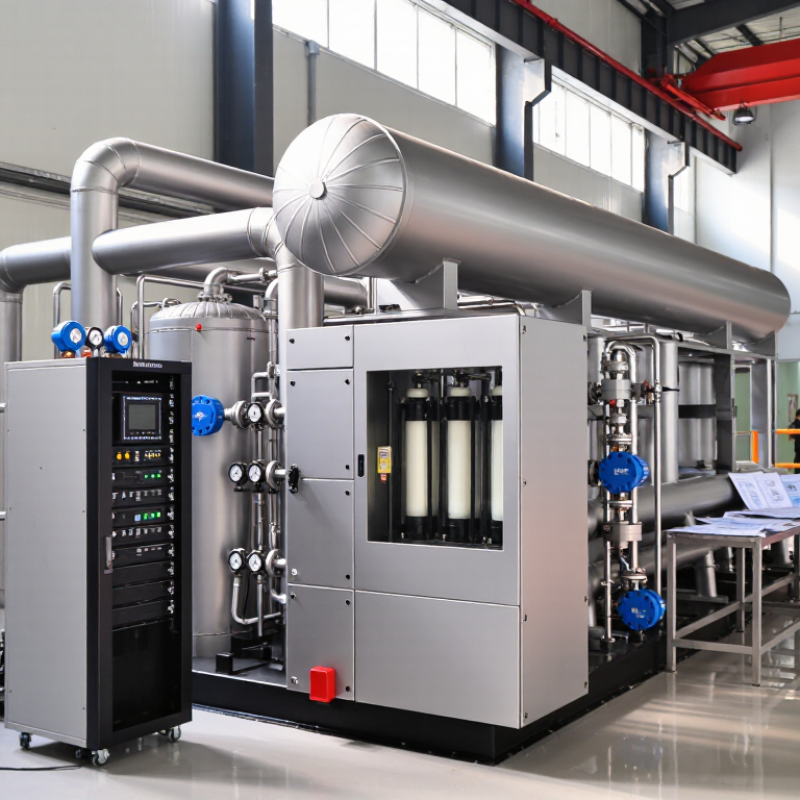
How to Choose a Top China Nitrogen Generator Supplier?

Define Your Nitrogen Generation Requirements

Before comparing a China nitrogen generator supplier, define the gas job precisely. Write down required purity, flow, pressure, dew point, operating hours, and expansion plans. For food packaging, 99.5% may be adequate; electronics or laboratory work may demand 99.999%. Do not copy a competitor’s specification. Ask for the actual consumption profile, including peak demand and idle periods.

PSA, membrane, and cryogenic systems behave differently under changing loads. Your supplier should calculate Nm³/h at the stated outlet pressure, not advertise only a purity figure. Request inlet-air limits, oxygen residual testing, dew-point data, noise levels, and compressor power. ISO 8573-1 helps define compressed-air contaminants, while site conditions still require practical verification. According to the U.S. Department of Energy’s Improving Compressed Air System Performance sourcebook, compressed-air systems can consume 10–30% of industrial electricity. That makes specific energy, measured in kWh per Nm³, a purchasing metric. The IEA’s Energy Efficiency 2023 report identifies industry as roughly 37% of global final energy consumption.

Tips: Send twelve months of production data, if available. Include altitude, ambient temperature, utility voltage, maintenance access, and backup requirements. Ask for a witnessed acceptance test. One imperfect assumption can distort the whole design. Over-specifying purity is common, and it may increase energy use without improving the process. Recheck every number with an engineer who understands your application.

Compare Generator Technologies and Technical Specifications

Choosing a China nitrogen generator supplier requires comparing process fit, not only quoted purity. PSA systems commonly reach 95–99.999% nitrogen purity and suit variable industrial demand. Membrane units are compact, start quickly, and often serve lower-flow applications. Cryogenic systems can deliver very high purity and large volumes, but their capital and operating demands are heavier. These ranges vary with feed air quality and operating pressure.

Read the specifications closely. Ask for nitrogen flow in Nm³/h, outlet pressure, oxygen residual, dew point, recovery rate, power consumption, and noise level. A supplier should state test conditions, not hide behind a single purity number. ISO 8573-1 helps define compressed-air quality, while ISO 14114 supports safer oxygen-deficiency risk management in nitrogen installations. The U.S. Department of Energy reports that compressed air can represent about 10% of industrial electricity use, and leakage may waste 20–30% of compressor output. Efficiency matters.

Look for measured evidence. Request factory acceptance records, calibration traceability, pressure-vessel documentation, and a clear maintenance schedule. Check whether the design includes inlet filtration, oxygen monitoring, automatic venting, and standby capacity. Small details matter. A larger generator is not always better; oversizing can increase cycling and energy waste. I would also compare performance at the actual site temperature and inlet pressure, because brochure figures can become optimistic. Sometimes, painfully so. A reliable supplier explains these limitations and provides operating data from comparable installations.

Evaluate Supplier Quality, Certifications, and Production Capacity

Choosing a top China nitrogen generator supplier requires more than comparing prices or factory photos. Supplier quality appears in engineering details, testing records, and customer support. Ask for material specifications, purity test results, flow data, and maintenance procedures. A reliable supplier should explain how the generator performs under changing temperatures, pressure, and operating hours. Request a factory audit or live production inspection when possible. Small details matter.

Certifications deserve careful checking. Verify whether ISO 9001 covers the actual manufacturing site and product scope. Depending on your market, check relevant electrical, safety, pressure, and environmental certifications. Certificates should be valid, traceable, and issued by recognized bodies. Do not accept scanned documents without verification. Production capacity also needs evidence. Review equipment lists, monthly output, testing stations, trained engineers, and spare-parts availability. A large workshop does not always mean dependable delivery. I once focused too heavily on facility size; that was not enough.

Tips: Ask for a recent production schedule, not a general promise. Confirm lead times for standard and customized units. Request references from similar industries, then discuss uptime, response speed, and warranty handling. Check whether technicians can support installation remotely or on-site. Leave room for questions. A strong supplier welcomes them, though no supplier can guarantee perfect performance in every project. Their willingness to explain limits may be more valuable than impressive claims.

How to Choose a Top China Nitrogen Generator Supplier? - Evaluate Supplier Quality, Certifications, and Production Capacity
Evaluation Dimension Key Metric to Verify Practical Reference or Requirement Evidence to Request Suggested Weight
Quality Management System Quality-control procedures and traceability A documented quality system aligned with ISO 9001:2015 is a strong baseline for design, purchasing, assembly, inspection, and corrective action. Valid certificate, certification scope, issuing body, audit date, incoming-inspection records, nonconformity reports, and corrective-action records 15%
Product Certifications Applicability of safety and conformity requirements For European shipments, CE conformity may apply under relevant machinery, electromagnetic compatibility, low-voltage, or pressure-equipment requirements, depending on the system design. EU Declaration of Conformity, technical file index, risk assessment, electrical drawings, pressure-vessel documentation, and applicable test reports 10%
Environmental and Safety Management Operational environmental and workplace-safety controls ISO 14001 and ISO 45001 can indicate structured environmental and occupational-safety management, although they do not replace product testing. Current certificates, site-audit records, emergency procedures, safety training records, and environmental-control documentation 5%
Nitrogen Purity Capability Guaranteed nitrogen purity at the specified flow rate PSA systems commonly cover approximately 95% to 99.999% nitrogen purity; higher purity normally requires lower flow, additional purification, or both. Performance curve showing purity versus flow, oxygen-analyzer calibration certificate, factory test results, and a contractual purity guarantee 15%
Flow Rate and Operating Conditions Nitrogen output, inlet-air pressure, temperature, and duty cycle Capacity must be evaluated at the actual purity, outlet pressure, ambient temperature, and continuous operating schedule—not only at a nominal maximum rating. Approved datasheet, design calculations, operating envelope, pressure-loss data, and a signed performance-test protocol 10%
Dew Point and Pretreatment Product-gas moisture and compressed-air treatment A pressure dew point of approximately −40°C is a common industrial reference; more demanding applications may specify −60°C or lower. Pretreatment should include filtration and drying suitable for the membrane or PSA process. Dew-point test report, filter specifications, dryer selection, drain arrangement, and maintenance schedule 8%
Production Capacity Ability to manufacture, assemble, test, and deliver the required quantity A capable supplier should show adequate assembly space, qualified technicians, documented production scheduling, and a test area sized for the proposed generator range. Factory video or audit, production-line photographs, monthly output by product category, current order load, equipment list, and staffing plan 10%
Factory Acceptance Testing Verification of purity, flow, pressure, alarms, and controls before shipment The FAT should reproduce the contract operating point and record stabilized readings rather than relying only on component certificates. FAT procedure, calibrated instruments, raw test data, alarm checklist, control-panel test, and customer witness options 8%
Core Component Reliability Service life and availability of adsorbent, valves, sensors, compressors, and controls The supplier should define replacement intervals and provide component specifications. No component should be accepted solely on an unverified “lifetime” claim. Bill of materials, component datasheets, recommended spare-parts list, warranty terms, and maintenance intervals 7%
Energy Efficiency Specific energy consumption and compressed-air demand Compare Nm³ of feed air per Nm³ of nitrogen at the same purity and pressure. Lower air-to-nitrogen ratios generally indicate better operating economics. Guaranteed air-consumption figure, compressor power calculation, operating-cost estimate, and test conditions 5%
Delivery and Project Execution Lead time, engineering coordination, packaging, and export documentation The quoted lead time should include engineering approval, procurement, assembly, FAT, packing, and shipping-document preparation. Milestone schedule, critical-path list, inspection plan, packing specification, quality dossier index, and recent anonymized delivery records 4%
After-Sales Service Response time, remote support, spare parts, and commissioning assistance A formal service process should define technical-response targets, warranty coverage, troubleshooting procedures, and spare-parts availability. Service-level agreement, warranty certificate, commissioning plan, training materials, spare-parts policy, and escalation contacts 3%
Total Suggested Evaluation Weight 100%
Evaluation rule: Verify every certificate, performance guarantee, and production claim against independently traceable documents. A supplier should not pass solely on certificates; the final decision should also consider witnessed testing, documented capacity, lifecycle cost, and after-sales support.

Assess Customization, Pricing, Delivery, and After-Sales Support

When choosing a China nitrogen generator supplier, assess customization before comparing prices. Ask whether the supplier can match your required nitrogen purity, flow rate, pressure, and dew point. A reliable engineering team should review your production schedule and gas consumption curve. It should also explain whether PSA or membrane technology suits your application. Request drawings, control logic, material specifications, and a clear list of included components. Small details matter, such as pipe connections and sensor calibration.

Pricing requires more than checking the equipment quotation. Compare energy use, replacement parts, installation costs, and expected maintenance over five years. Ask for a line-by-line offer. A low initial price may hide expensive compressors or limited controls. I once saw a project delayed because the buyer overlooked local electrical requirements. That mistake was avoidable. Still, every specification should be verified in writing, not assumed from a sales conversation.

Delivery performance depends on more than a promised shipping date. Confirm factory testing, packing standards, export documents, installation support, and commissioning responsibilities. Ask for a production schedule with inspection points. After-sales support should include response times, warranty terms, troubleshooting procedures, and recommended spare parts. Test the support channel before purchase. A clear technical reply within one working day is more useful than a polished brochure. Also, request operating manuals and training for your maintenance staff. Good support is measurable.

Verify Supplier Reliability Through Audits, Samples, and References

How to Choose a Top China Nitrogen Generator Supplier?

A reliable supplier should welcome an on-site or remote audit. Check production records, calibration logs, weld quality, and final inspection procedures. The ISO Survey 2023 reported more than one million valid ISO 9001 certificates worldwide. Certification helps, but it never replaces evidence. Ask for recent audit findings and corrective-action records. In practice, missing records often reveal weak process control.

Request a nitrogen generator sample or a monitored factory trial. Test nitrogen purity, flow rate, outlet pressure, dew point, noise, and power consumption. Use the same feed-air conditions stated in the quotation. Compare measured results with the supplier’s datasheet. ISO 8573-1 provides recognized methods for compressed-air quality classification. One imperfect test can be useful. It may expose assumptions hidden in a polished proposal.

Tips: Ask for three customer references from similar industries. Call them directly, and verify installation dates, uptime, maintenance response, and spare-part availability. Request photos of nameplates and commissioning reports. A reference without operating details is weak evidence. Check whether the supplier can explain performance deviations clearly. Do not accept only a certificate, brochure, or factory video. A small sample test, an honest limitation, and traceable records usually show more reliability than confident promises.

Call (416) 661-5667