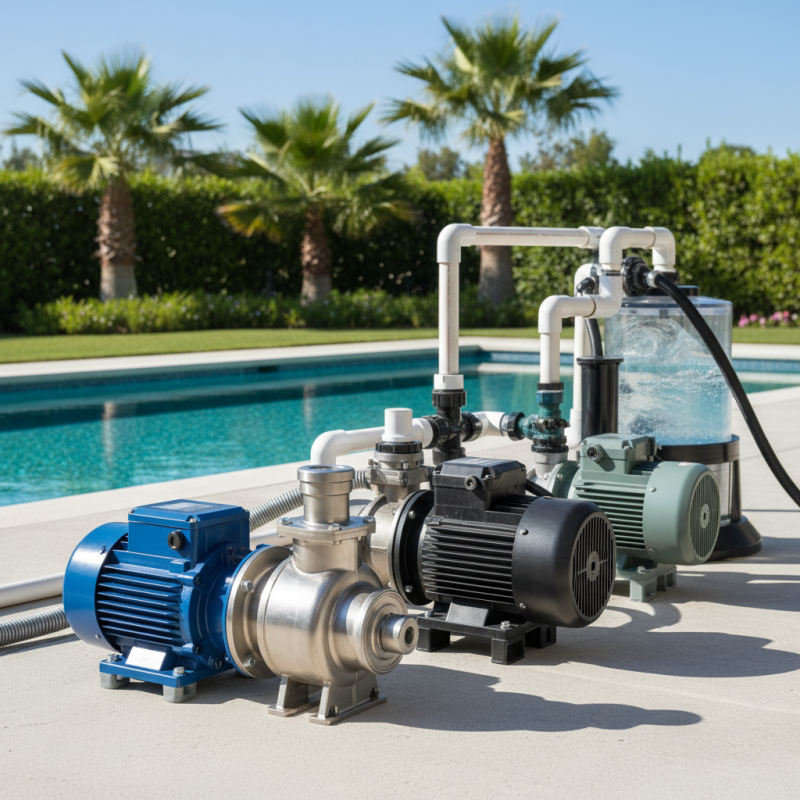
How to Choose the Right Pool Pumps Motors for Your Swimming Pool?
Choosing the right pool pumps motors is essential for optimal pool performance. A recent industry report states that inefficient pool pumps can waste up to 70% of energy. Selecting the appropriate motor affects pump efficiency and overall operating costs.
Pool pumps motors come in various sizes and types, each designed for specific conditions. Understanding the flow rates and head pressure requirements is crucial. An ill-suited motor can lead to increased energy bills and unnecessary wear.
Investing time in research pays off. Many pool owners overlook the importance of proper motor selection. This mistake can result in costly renovations or repairs. To maintain a clean, safe swimming environment, the right choice in pool pumps motors is vital.
Understanding the Importance of Pool Pump Motors in Pool Maintenance
When it comes to swimming pool maintenance, the pool pump motor plays a crucial role. It serves as the heart of the system, circulating water effectively. A report by the American Society of Mechanical Engineers highlights that nearly 70% of pool energy consumption comes from the pump. This underscores the significance of selecting the right motor.
Maintenance requirements should never be overlooked. Regularly check for leaks and unusual noises. A malfunctioning motor can lead to costly repairs and water stagnation. It’s reported that pools with inefficient pumps can waste up to 20,000 gallons of water a year. To optimize performance, consider switching to variable-speed motors. They can reduce energy costs by up to 80%.
Tip: Always match your pump motor to the size of your pool. An oversized motor can lead to turbulence and ineffective filtration. Tip: Monitor your electricity bill. An increase may indicate that your pump motor needs attention.
The right choice ensures not just efficiency but also a vibrant, clean swimming space. Make informed decisions to safeguard your investment while enjoying your pool to the fullest.
Types of Pool Pump Motors: Inground vs. Above Ground Options
Choosing the right pump motor for your swimming pool depends on its type. Inground pools usually require more powerful motors. They handle larger volumes of water, hence the need for strength. These motors must be efficient and dependable. It's vital to consider energy consumption to reduce long-term costs.
Above ground pools, on the other hand, typically use lighter and less powerful motors. These pools are often smaller. While they still need reliable pumps, the power requirements differ. It's essential to ensure that the motor fits the pool's size and maintenance frequency.
When selecting a motor, think about filtration and circulation. A motor that’s too weak may not circulate water effectively. But a motor that's overly powerful can waste energy and create additional equipment wear. Always double-check specifications and usage requirements. This choice can greatly affect pool maintenance efficiency and energy consumption.
Comparison of Pool Pump Motors: Inground vs. Above Ground
Key Features to Consider When Choosing a Pool Pump Motor
When selecting the right pool pump motor, several key features should be considered. Efficiency is crucial. A high-efficiency motor reduces energy costs and extends the life of your pump. Look for motors with an Energy Star rating. They often perform better and are more environmentally friendly.
Another important feature is the horsepower. The size of your swimming pool determines the horsepower needs. A small pool might need around 1 HP, while larger pools may require 2 HP or more. Incorrect sizing can lead to inadequate water circulation or higher energy consumption.
Tips: Always check your pool's flow rate requirements. Matching the pump to the pool's needs is essential. Don’t overlook noise levels. Some motors operate quietly, while others can be disruptive. An unnecessary noise can damage your relaxation time.
Lastly, ensure the motor is compatible with your current pool equipment. Sometimes, older systems may need upgrades, influencing your choice. Keep in mind that investing in quality may save costs in the long run.
Assessing Pool Size and Flow Rate for Optimal Pump Selection
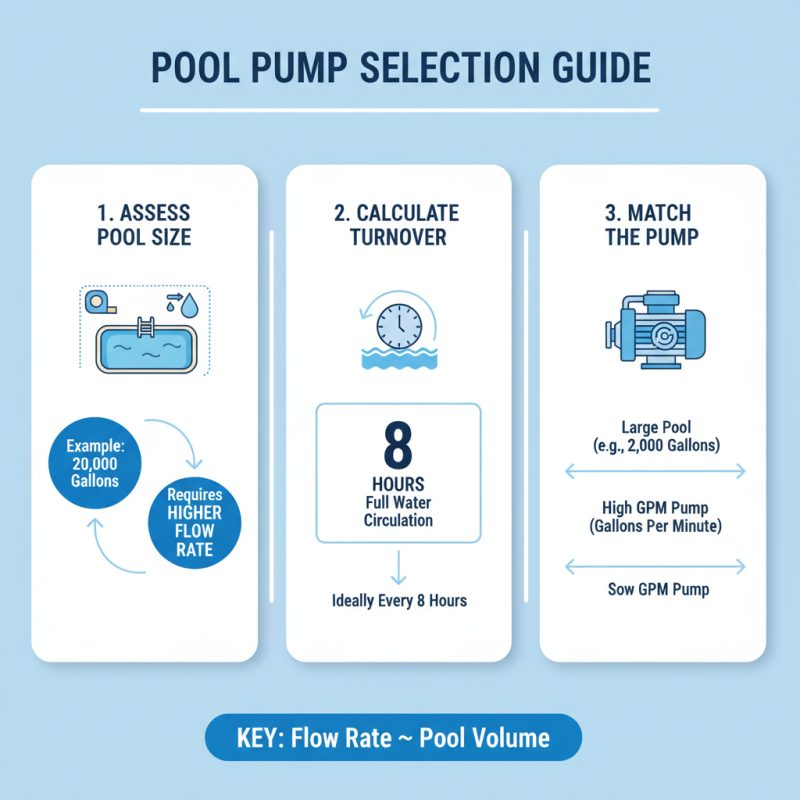
When selecting a pool pump motor, assessing pool size and flow rate is crucial. A large pool requires a pump with a higher flow rate. For instance, a pool of 20,000 gallons will not thrive on a pump designed for smaller volumes. It’s essential to calculate the necessary turnover rate. This is the time it takes to circulate all the water in the pool. Ideally, this should happen every 8 hours.
Consider the layout of your pool. A longer distance between the pump and pool can reduce efficiency. A weaker flow rate may mean not all areas are adequately filtered. Many pool owners overlook these details. They assume all pumps are equal, but they are not. The right pump is not just about size but also about speed. A variable speed pump can often be more efficient. It allows flexibility in adjusting the flow based on your pool's needs.
Reflect on maintenance as well. A pump that is too powerful might increase energy costs. It could lead to more frequent repairs. On the other hand, an underpowered pump could result in poor water quality. This can encourage algae growth. Finding balance is key. Each pool is unique, requiring tailored solutions. Pool size and flow rate are the starting points for effective pump selection.
Energy Efficiency and Cost Considerations for Pool Pump Motors
When selecting the right pool pump motors, energy efficiency is crucial. A pump's efficiency directly impacts operational costs. Inefficient motors can lead to high energy bills. Look for models that are ENERGY STAR certified; they use less energy while providing the same performance. A small change in energy consumption can save you money in the long run.
Moreover, consider the size of the motor. A motor that is too powerful may waste energy. Too small a motor, on the other hand, can struggle to circulate water effectively. It's essential to find a balance. Additionally, variable-speed pumps can offer flexibility. They allow you to adjust the speed, reducing energy use at lower speeds during off-peak hours.
Take note of your pool's specific needs. How often do you swim? Do you have trees shedding leaves? These factors play a role in determining the right motor. Reflect on your past experiences with pumps. Did your last one raise your energy costs? Did it break down too often? Evaluating these moments can guide your next choice.