
How to Source Outdoor Tents for Global Buyers?
Sourcing outdoor tents for global buyers requires more than comparing prices and catalog photos. The Outdoor Tt market includes family camping tents, backpacking shelters, expedition models, and temporary commercial structures. Each category demands different fabrics, frame systems, waterproofing standards, and packing methods. A tent designed for humid Southeast Asia may fail in alpine wind or desert heat.
Outdoor product-development specialist Richard Oakley says, “A tent is not sourced by price alone; it is sourced by climate, use, and proof.” His point reflects practical buying experience. Global buyers should request fabric specifications, hydrostatic-head results, seam-tape details, pole materials, fire-performance information, and verified load tests. Factory samples should be assembled outdoors, not only photographed in a showroom. Check zipper movement, floor construction, ventilation, guy-line strength, and packed dimensions. Small details become expensive problems at scale.
Reliable sourcing also depends on supplier evaluation. Review production capacity, quality-control records, sample consistency, minimum order quantities, packaging options, and communication speed. Ask how the factory handles failed inspections. That answer matters. A perfect spreadsheet does not exist. Buyers can still reduce uncertainty through staged orders, independent inspections, and clear acceptance criteria. Some teams overlook carton compression during long-distance shipping. Others approve a sample before testing it in rain. Those mistakes are understandable, but avoidable. The strongest Outdoor Tt sourcing strategy connects field conditions, technical evidence, responsible manufacturing, and realistic commercial planning. It protects margins without sacrificing user safety or product trust.
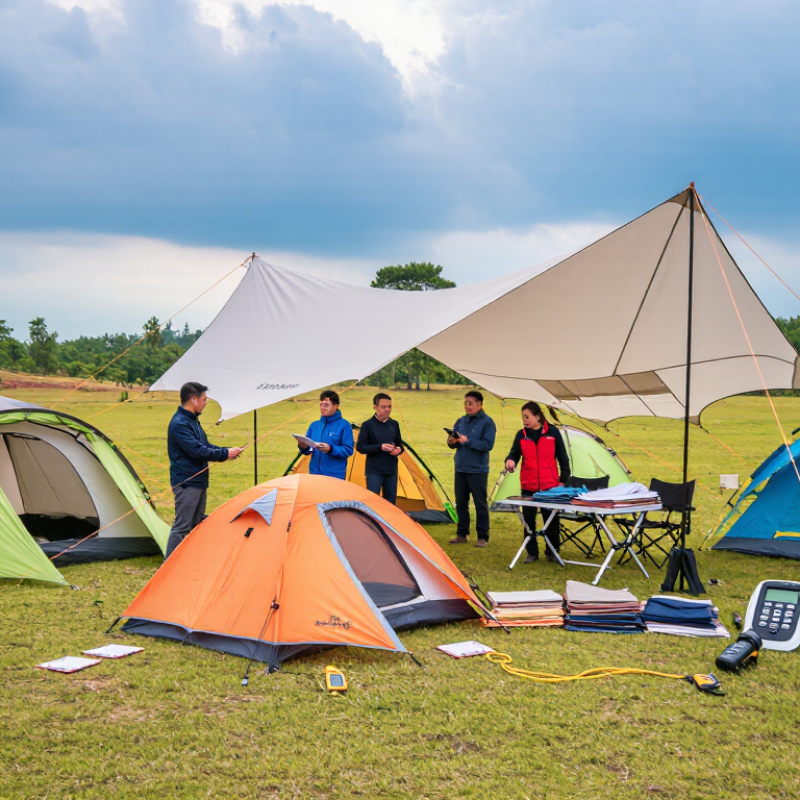
Define Tent Categories and Requirements Under ISO 5912:2023
How to Source Outdoor Tents for Global Buyers?
Define Tent Categories and Requirements Under ISO 5912:2023
Outdoor tent sourcing should begin with use, not appearance. Define each category by sleeping capacity, season, transport method, and expected weather exposure. A family tent needs stable pitching, usable ventilation, and clear internal space. A backpacking tent needs low weight, compact packing, and efficient pole structure. Festival, touring, and long-stay models may require different priorities. Do not treat “four-season” as proof of compliance. Under ISO 5912:2023, buyers should review the relevant safety, performance, and fitness-for-use requirements with suppliers and qualified testing bodies. These may include structural strength, rain resistance, ventilation, materials, assembly, instructions, and product marking.
Ask for a technical file, not only a sample. It should include fabric specifications, coating details, seam construction, pole dimensions, packed size, weight tolerance, and inspection records. Request test evidence linked to the exact production model. A visually strong tent can still fail after repeated pitching or heavy rain. This is where sourcing experience matters. Small changes in fabric, thread, or pole joints can affect performance. My own practical view is that early samples often look better than mass production. That risk deserves a second inspection.
Tips: Write requirements in measurable terms. Specify water-resistance results, ventilation openings, load expectations, and acceptable defects. Check labels and user instructions before shipment. Compare independent test results with factory claims. If a category is unclear, pause and ask whether the intended use matches ISO 5912:2023. Clear questions prevent expensive assumptions.
| Procurement Category | Typical Use and Buyer Profile | Recommended Product Requirements | ISO 5912:2023 Relevance | Key Verification Data | Suggested Sourcing Specification |
|---|---|---|---|---|---|
| Backpacking and Trekking Tents | For individual travelers, hikers, and lightweight touring where low packed weight and compact storage are important. | Freestanding or semi-freestanding structure; aluminum or equivalent lightweight poles; double-wall construction for general three-season use; effective ventilation; waterproof flysheet and bathtub-style groundsheet. | The standard provides requirements and test methods for camping tents. It should be used to assess safety, workmanship, functional performance, and weather-related performance rather than as a substitute for defining the intended use. | Packed mass Packed size Water penetration Ventilation Pole stability | Define the number of occupants, season of use, minimum internal dimensions, maximum packed weight, fabric construction, hydrostatic-pressure target, repair-kit contents, and accessory compatibility. |
| Family Camping Tents | For vehicle-based leisure camping, families, and longer stays at established or semi-established campsites. | Larger living area; multiple sleeping compartments; durable floor; adequate headroom; screened ventilation openings; clear separation between sleeping and cooking areas; robust guy-line system. | ISO 5912:2023 is relevant to the tent’s construction, safety, materials, and performance testing. The buyer should separately specify occupancy, layout, storage, and comfort expectations. | Occupancy layout Internal height Rain resistance Ventilation Flame behavior | Specify usable floor area, sleeping-cabin dimensions, door width, ventilation area, fabric coating, floor bathtub height, guy points, carry-bag dimensions, and replacement-part availability. |
| Festival and Short-Stay Tents | For temporary recreational use, short-duration events, and entry-level seasonal camping. | Simple setup; low purchase cost; compact packaging; adequate rain protection; reliable zippers and seams; clear setup instructions; visible guy lines and anchoring points. | The standard can support conformity evaluation for applicable tent requirements and test methods. It does not determine whether a tent is suitable for severe weather or extended occupancy. | Setup time Seam integrity Water penetration Anchoring User instructions | State the intended weather conditions, maximum occupancy, minimum service life, included pegs and guylines, setup sequence, warning labels, and packaging drop-test requirements. |
| Four-Season and Alpine Tents | For cold-weather travel, exposed terrain, snow conditions, and users requiring increased structural and weather resistance. | Strong pole architecture; multiple crossing points or reinforced frame design; snow-shedding geometry; low-temperature-compatible materials; protected vents; durable clips, buckles, and guy systems. | ISO 5912:2023 should be treated as a baseline camping-tent standard. Additional buyer-defined testing is necessary for snow loading, extreme wind, freezing temperatures, and other specialized conditions. | Wind testing Snow-load assessment Cold flexibility Water resistance Frame durability | Define environmental limits, design wind speed, snow-load method, operating temperature range, pole alloy or material, fabric tear strength, seam construction, and field-repair provisions. |
| Roof-Top and Vehicle-Integrated Tents | For overland travel and vehicle-based camping where the tent is mounted on a vehicle roof, platform, or vehicle accessory system. | Rigid or foldable base; secure mounting interface; controlled opening and closing force; weatherproof hinge and zipper areas; ladder safety; adequate load distribution; compact travel profile. | ISO 5912:2023 may be relevant to the tent portion, but vehicle mounting, road vibration, roof-load limits, ladder safety, and vehicle compatibility require separate engineering validation. | Static load Dynamic load Mounting security Rain resistance Ladder safety | Specify vehicle compatibility, static and dynamic roof-load limits, mounting-hardware grade, installation torque, packed height, opening time, ladder angle, and user maintenance instructions. |
| Glamping and Hospitality Tents | For commercial accommodation, resorts, temporary lodging, and premium outdoor hospitality applications. | Larger habitable space; reinforced entry and floor zones; durable doors and windows; improved thermal comfort; organized cable routing; replaceable components; documented cleaning and maintenance procedures. | ISO 5912:2023 can help evaluate applicable tent performance and safety requirements. Commercial accommodation may also require local building, fire, electrical, accessibility, and occupancy compliance. | Structural safety Water penetration Flame behavior Durability Maintenance | Define expected occupancy period, local climate, foundation and anchoring method, fire-safety documentation, replacement-fabric availability, cleaning chemicals, warranty period, and installation method. |
| Emergency, Relief, and Institutional Tents | For temporary shelter, disaster response, field operations, medical support, and institutional procurement. | Rapid deployment; clear identification; repeatable packing; robust anchoring; washable or replaceable components; accessible entrances; modular connection options; documented inspection procedure. | ISO 5912:2023 may be used for applicable camping-tent requirements, but emergency and institutional buyers should add requirements for deployment, logistics, sanitation, accessibility, fire safety, and operational continuity. | Deployment time Occupancy capacity Weather resistance Fire behavior Logistics data | Specify climatic zone, deployment team size, storage duration, pallet quantity, packed dimensions, repair materials, inspection intervals, accessibility needs, and required documentation. |
| Children’s and Indoor-Outdoor Play Tents | For supervised play, educational activities, backyard use, and light recreational applications. | Stable rounded structure; no accessible sharp edges; secure fasteners; non-entrapment design; low-risk materials; clear age guidance; adequate ventilation and visibility. | The product may fall under requirements beyond ISO 5912 depending on its intended use and market. Toy, consumer-product, chemical, flammability, and child-safety rules must be reviewed separately. | Material safety Edge safety Ventilation Stability Age suitability | Define age range, supervision requirements, material declarations, cleaning method, flame behavior, ventilation openings, collapse resistance, and packaging warnings for the target market. |
| General Compliance and Supplier File | Applies to every tent category purchased for international distribution. | Consistent bill of materials; controlled production specifications; traceable fabric, poles, zippers, seams, and coatings; approved sample; inspection criteria; corrective-action process. | Request evidence that the exact production model has been evaluated against the applicable requirements and test methods of ISO 5912:2023. Confirm the edition, scope, sample identity, and test conditions. | Test report Inspection record Material traceability User manual Label review | Maintain a technical file containing drawings, bill of materials, risk assessment, test reports, inspection plan, packaging specification, labeling artwork, warranty terms, spare-parts list, and change-control records. |
