China Best Swimming Pool Service Suppliers for Global Buyers
Choosing reliable China swimming pool service suppliers can shape the safety, appearance, and operating cost of a commercial pool. Global buyers often need more than attractive product catalogs. They need proven maintenance knowledge, responsive communication, and practical support after delivery.
Experienced suppliers may provide pool cleaning, filtration inspection, water treatment guidance, equipment replacement, and seasonal maintenance planning. Some also support hotels, sports centers, residential communities, and public facilities. Their teams should understand pumps, sand filters, dosing systems, liners, tiles, lighting, and circulation performance. Clear service records matter. So do technician training, quality procedures, and documented project experience.
A dependable swimming pool service partner explains costs, response times, spare parts, and warranty limits before cooperation begins. Buyers should request references, technical files, inspection reports, and realistic service schedules. Factory visits or video audits can reveal storage conditions and testing practices. Small details matter, such as labeled cables, sealed chemical containers, and clean filtration rooms.
Not every supplier performs equally well. Some websites look professional but provide limited technical evidence. This is where careful evaluation becomes essential. Delivery speed may also depend on location, customs procedures, and local installation capacity. Buyers should avoid judging suppliers by price alone. A lower quote can hide training gaps, weak documentation, or expensive maintenance later.
This guide examines leading Chinese suppliers through experience, technical capability, service reliability, communication quality, and international cooperation. It also considers a difficult question: can a supplier support your pool after the contract is signed? The answer requires evidence, not promises.
What Defines a Reliable Swimming Pool Service Supplier in China
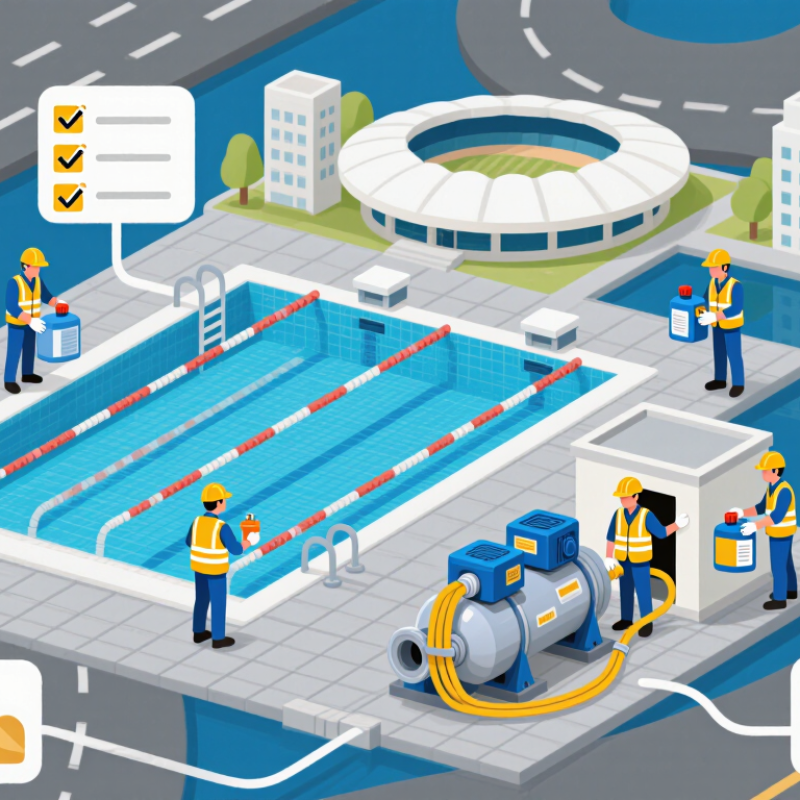
A reliable swimming pool service supplier in China should offer more than competitive pricing. It should understand water circulation, filtration, heating, lighting, and safety requirements. Project experience matters, especially for hotels, schools, and private developments. Ask for completed project records, technical drawings, material specifications, and maintenance procedures. Clear records matter. A dependable supplier also explains limitations before signing a contract, rather than promising every result.
Technical competence becomes visible during planning and installation. For a commercial pool, the supplier should calculate flow rates, equipment capacity, drainage needs, and energy use. It should coordinate with builders and electrical contractors. Poor drawings create expensive problems later. Ask whether engineers review site dimensions and local climate conditions. Reliable teams provide inspection checklists, installation schedules, and operating training. Practical support matters. Remote guidance alone may not solve a blocked filter or unstable water balance.
Reliability also depends on communication after delivery. Written warranties should define response times, excluded damage, spare parts, and service responsibilities. Buyers can contact previous customers and ask about delayed repairs, documentation quality, and actual equipment performance. Check certificates carefully, but do not treat paperwork as proof of good service. One weakness deserves attention: some suppliers depend heavily on individual technicians. If that person leaves, support may weaken. A stronger supplier keeps shared records, cross-trained staff, and clear escalation channels. Honest suppliers admit where their service coverage is limited. That honesty is useful.
Core Services Offered by Chinese Swimming Pool Service Companies
Chinese swimming pool service companies support global buyers from planning to long-term maintenance. Their core services often include pool design, equipment selection, installation guidance, water treatment, and technical support. Experienced teams can review drawings, calculate circulation needs, and recommend suitable pumps, filters, heaters, and disinfection systems. They may also provide customized solutions for hotels, residential projects, schools, and fitness facilities.
A dependable service provider should explain material specifications, testing procedures, delivery schedules, and warranty terms clearly. Remote commissioning can include video instruction, wiring checks, and operating demonstrations. On-site support is valuable when projects require careful pipe alignment or complex control systems. Water quality testing also matters. Poor chemical balance can damage surfaces and reduce equipment life. However, not every quotation reveals the full service scope. Some proposals look complete but exclude training, spare parts, or after-sales response times. Buyers should ask detailed questions before signing.
Tips: Request technical drawings, maintenance schedules, and a complete list of included services. Check whether engineers have handled similar pool environments. Keep written records of water tests and equipment settings. Small details matter. A pilot inspection before shipment can prevent costly corrections, although it may add time and expense. Suppliers should also explain local installation limits and safety requirements instead of promising a universal solution.
China Best Swimming Pool Service Suppliers for Global Buyers
Core Service Checks Commonly Covered by Chinese Swimming Pool Service Companies
Professional pool service programs commonly include water testing, chemical balancing, sanitation control, and equipment monitoring. The chart uses typical residential reference targets: pH 7.0–7.8, free chlorine 1–3 ppm, total alkalinity 80–120 ppm, and calcium hardness 200–400 ppm. Actual requirements may vary by local regulations, pool type, climate, and disinfectant system.
Reference basis: CDC Model Aquatic Health Code and widely used residential pool-maintenance guidance.
How to Evaluate Supplier Quality, Experience, and Certifications
Choosing China’s best swimming pool service supplier requires more than comparing prices. Quality appears in small details: clean welds, sealed control cabinets, clear wiring labels, and protective packaging. Ask for recent production photos, inspection records, and test results for pumps, filters, lighting, and water-treatment systems.
Experience should match your project, not just the supplier’s years in business. Request references for hotels, residential developments, or public facilities with similar pool sizes. A reliable supplier can explain flow rates, corrosion resistance, installation limits, and maintenance schedules without avoiding technical questions. Ask for a sample service report. Details matter.
Certifications need careful checking. Request the certificate number, issuing organization, validity period, and exact product scope. ISO 9001 may show quality management, but it does not prove every product is safe or suitable. For electrical equipment, verify applicable regional conformity documents and independent test reports. A factory audit can reveal storage problems, inconsistent labeling, or weak final inspections. These issues are easy to miss online.
Do not trust polished presentations alone. Speak with technicians, not only sales staff. Check response times before placing an order. A supplier may offer excellent equipment but lack local installation support. That weakness can become expensive later. No evaluation is perfect, and buyers sometimes focus too heavily on certificates. Actual records, technical answers, and after-sales behavior usually provide stronger evidence.
Steps for Selecting and Working With a Chinese Pool Service Supplier
Selecting a Chinese pool service supplier requires more than comparing quotations. Define the pool size, filtration method, water treatment needs, climate, and installation deadline. Ask for technical drawings, maintenance procedures, spare-parts lists, and service response times. China suppliers may offer strong manufacturing access, but capability differs widely. Request factory videos, project references, technician certificates, and recent inspection records. The World Health Organization’s Global status report on drowning estimates over 300,000 annual drowning deaths, making safety documentation essential. Check electrical protection, chemical handling, drainage, and emergency procedures before signing.
Tips: Send the same specification to three suppliers. Compare warranty terms, not only prices. Order a small trial when possible. A polished catalog is not proof of field performance.
Use a staged agreement with clear acceptance tests. Record pump noise, water clarity, leakage, flow rate, and control-system functions during commissioning. Include training for local staff and define remote support hours. The Global Wellness Institute’s 2024 Global Wellness Economy Monitor valued physical activity at about 1.1 trillion dollars in 2022, showing sustained demand for reliable facilities. Still, market growth does not guarantee service quality. No checklist is perfect; local water chemistry can expose weaknesses after installation. Keep communication in written English, confirm every revision, and retain photos of completed work. A dependable supplier should discuss limitations openly, rather than promise effortless operation.