
10 Wax Candle Buying Tips for Global Buyers?

Buying Wax Candles for international markets requires more than choosing an attractive jar and pleasant fragrance. A product may look excellent in a showroom but fail during long-distance transport, humid storage, or repeated customer use. This guide introduces ten practical buying tips for global buyers, based on common sourcing considerations and real product evaluation.

Start with the wax itself. Soy, paraffin, beeswax, and blended formulas can differ in appearance, scent performance, burn time, and temperature stability. Ask suppliers for precise specifications, sample candles, and test results rather than relying on attractive descriptions. Check the wick, flame behavior, container quality, labeling, and packaging strength. Small details matter. A loose lid or weak carton can create costly problems.

Global purchasing also requires careful communication. Confirm minimum order quantities, production schedules, customization limits, payment terms, and shipping conditions before placing an order. Request photos of finished goods and inspect samples under normal burning conditions. Fragrance preferences vary widely between markets, so one successful scent may not suit every region. That assumption deserves review. Buyers should also verify that product labels, safety information, and packaging meet the destination market’s applicable requirements. Reliable suppliers communicate clearly and provide consistent documentation. Still, no checklist removes every risk. Manufacturing variations happen, and testing may reveal weaknesses late. The following ten tips will help buyers compare suppliers more carefully, reduce avoidable surprises, and select Wax Candles that balance quality, safety, presentation, and commercial value.
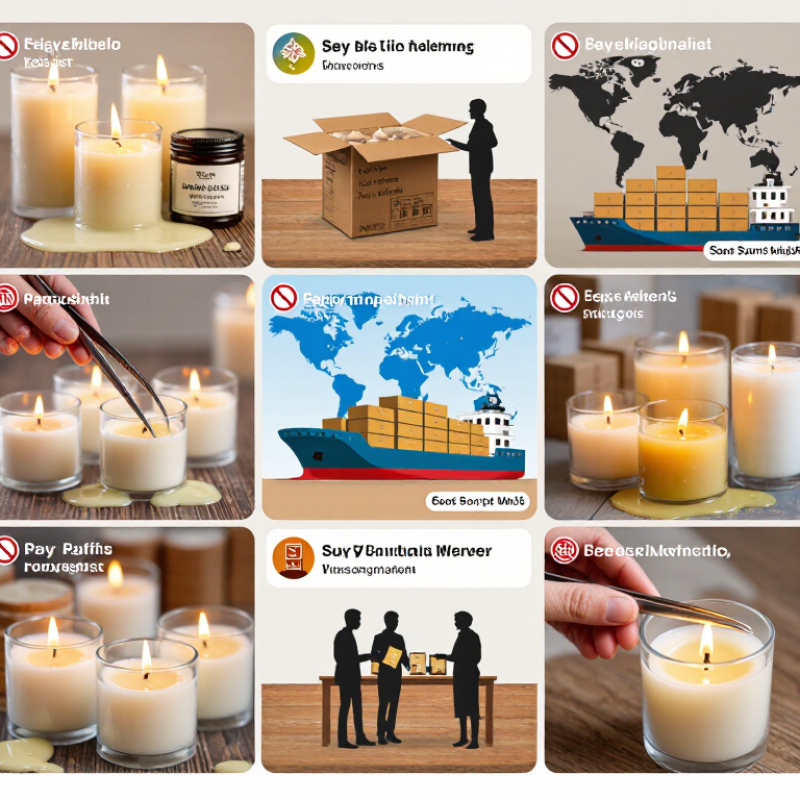
10 Wax Candle Buying Tips for Global Buyers?

Define Your Market Needs and Candle Buying Requirements

Buying Guide

10 Wax Candle Buying Tips for Global Buyers?

Define Your Market Needs and Candle Buying Requirements

Global buyers should define market needs before comparing wax, vessels, or decoration. A coastal gift shop may need moisture-resistant packaging, while a winter retailer may prioritize long burn times. Study customer age, price tolerance, preferred scents, and buying seasons. Ask whether candles serve home use, gifts, hotels, or events. These details shape wax selection, jar size, fragrance strength, and order quantities. Start with sales evidence, not personal taste. I have seen attractive candles fail because their scent felt too strong for local customers.

Request samples representing the final product, not only wax chips. Test burn time, flame stability, soot, scent throw, and surface finish in realistic rooms. Record results at different temperatures, because transport and storage conditions vary widely. Check wick trimming instructions and warning labels before approving packaging. Suppliers should provide material specifications, batch information, and relevant safety documentation. Reliable records make quality problems easier to investigate. Do not trust one successful sample.

Set clear purchasing requirements in writing. Include dimensions, wax composition, fragrance limits, container material, color tolerance, packaging method, carton strength, MOQ, lead time, and inspection criteria. Confirm whether local labeling, recycling, import, or safety rules apply. Requirements differ by destination. A supplier’s experience helps, but buyers remain responsible for checking current obligations. I once underestimated carton strength, and several containers arrived with scuffed surfaces. That mistake changed my process: approve a packed shipping sample before placing a large order. Leave room for controlled testing. A lower unit price can hide higher returns, storage costs, or customer complaints.

Compare Wax Types, Burn Quality, and Fragrance Performance

10 Wax Candle Buying Tips for Global Buyers

Wax choice changes burn quality, scent release, and customer satisfaction. Soy wax usually burns slowly and gives a softer fragrance throw. Paraffin often creates a stronger hot throw, but buyers should check soot performance and wick design. Beeswax burns steadily, although its natural scent can affect delicate fragrances. Coconut blends may produce a smooth melt pool, but their formulas vary widely. The Grand View Research 2024 report valued the global candle market at about USD 12.88 billion in 2023. This growth increases pressure on suppliers to prove consistency, not just attractive packaging.

Buying tip: Request burn-test records for each wax formula. Check total burn time, flame height, melt-pool width, and residue after two hours. A full melt pool matters. It does not guarantee a perfect candle. Room size, airflow, vessel diameter, and wick trimming can change results. I would test the same candle in a quiet room and near a draft, because laboratory results may feel too clean.

Buying tip: Compare fragrance performance at cold and hot stages. A pleasant jar scent may become weak after lighting. Ask for fragrance load, IFRA-compliant documentation, and batch consistency records. The National Candle Association identifies fragrance as a major purchase driver, but stronger is not always better. Heavy fragrance can smell harsh or burn unevenly. Test samples for wax frosting, tunneling, smoke, and scent balance. Keep a simple scoring sheet. My own preference can still be wrong. Data should lead the final purchase decision.

Evaluate Wicks, Containers, Packaging, and Product Durability

10 Wax Candle Buying Tips for Global Buyers

Choose the wick according to wax type, vessel diameter, and fragrance load. Ask for burn-test records, not attractive sample photos. The flame should remain steady, with limited soot and no dangerous flare. Check wick centering carefully. A small shift can create uneven melting and excess heat. Confirm the wick contains suitable materials and meets the destination market’s safety requirements. Test at least three candles from different production batches.

Inspect containers for cracks, sharp rims, weak bases, and heat stress. Glass should feel stable and sit flat on a table. Metal containers need clean seams and reliable coatings. Do not judge durability from appearance alone. I once saw a polished container fail after repeated heating. That changed my inspection process. Request temperature-cycle testing when shipping conditions are extreme.

Packaging should prevent movement, dust, moisture, and surface scratches. Use dividers that protect the lid and vessel during handling. Check carton compression before approving large orders. Labels should remain readable after rubbing, storage, and temperature changes. Include clear usage warnings and required product information for each destination. Confirm carton dimensions and pallet strength with your logistics team. Product durability also depends on wax adhesion, fragrance stability, and lid fit. Ask for retained samples after several months. A single successful burn is not enough evidence. Test again.

10 Wax Candle Buying Tips for Global Buyers

Evaluate wicks, containers, packaging, and product durability before placing an order.

The chart shows a practical buyer-priority score from 0 to 100. Wick performance, container safety, packaging strength, and long-term product durability should be checked through samples, burn tests, transit simulations, and documented quality inspections.

Check Safety Standards, Certifications, and Import Regulations

10 Wax Candle Buying Tips for Global Buyers

Global candle purchasing requires more than checking wax color and burn time. A polished jar may still fail a safety review. Ask the supplier for wax specifications, wick details, fragrance disclosure, batch records, and recent burn-test reports. Test samples yourself, including flame height, soot, jar temperature, and burning stability.

Small details matter. Inspect the lid, glass edges, wick position, and warning label before approving bulk production.

I once trusted a clean-looking sample too quickly; its wick later produced excessive smoke.

Confirm whether the supplier follows the candle safety standards required in your destination market. Certificates should show the tested product, test date, laboratory identity, and applicable standard. A certificate without clear scope is weak evidence.

For fragranced candles, request safety data when required, especially if fragrance oils are shipped separately. Check whether the laboratory uses recognized competence requirements, such as ISO/IEC 17025 accreditation.

Import compliance also needs careful checking. Verify the correct tariff classification, country-of-origin marking, packaging rules, language requirements, and consumer warnings. Some markets require recycling labels or extended producer responsibility registration.

Customs authorities may request invoices, test reports, ingredient information, or transport documents. Regulations change. Check official government sources or use a qualified customs specialist before ordering. Keep every document linked to the production batch. Missing paperwork can delay a shipment, even when the candles themselves are safe.

Assess Suppliers, Pricing, Minimum Orders, and Shipping Terms

10 Wax Candle Buying Tips for Global Buyers

Supplier assessment should begin with evidence, not polished photos. Request factory details, wax specifications, wick testing, batch records, and recent export references. A supplier should explain fragrance limits, burn-time testing, packaging strength, and defect handling clearly. Ask for a paid sample before discussing large quantities. Small details matter. Grand View Research estimated the global candle market at about US$12.9 billion in 2022, showing strong demand but also intense supplier competition. Market estimates differ, so treat forecasts as guidance, not certainty.

Compare prices using identical specifications. Include wax type, vessel material, fragrance load, labels, cartons, testing, tooling, and payment terms. A low unit price may hide expensive molds or weak export packaging. Request three quotations with the same annual volume and delivery basis. Confirm the minimum order quantity for each color, scent, and container. Some factories accept a mixed MOQ, while others charge setup fees. The best forecast is still imperfect.

Shipping terms can change the final cost sharply. Use the exact Incoterms 2020 rule, named port, insurance responsibility, and document list. UNCTAD’s Review of Maritime Transport 2024 states that over 80% of world merchandise trade by volume moves by sea. Freight delays remain possible. Compare FCA, FOB, CIF, and DDP carefully, because “delivered” does not always mean customs costs are included. Check carton dimensions, pallet limits, HS classification, and destination charges before approving production. I would also keep a freight buffer, although the correct percentage depends on season and route.

10 Wax Candle Buying Tips for Global Buyers: Assess Suppliers, Pricing, Minimum Orders, and Shipping Terms

Buying Dimension Typical Market Benchmark What Global Buyers Should Verify Risk Signals and Practical Buying Tip
1. Wax Type ParaffinUsually the lowest-cost option.
SoyCommon for premium and home-fragrance ranges.
BeeswaxTypically higher priced and naturally colored.
Coconut blendsOften positioned as a premium blend.
Request the wax composition by percentage, whether the wax is refined or blended, and the relevant safety data. Confirm that the wax specification remains unchanged between samples and production batches. Risk: “Natural wax” without a composition statement.
Tip: Put the exact wax formula or acceptable percentage range in the purchase contract.
2. Supplier Capability A capable supplier should provide product specifications, sample support, production capacity, packaging details, quality-control procedures, and export documentation. Assess factory or workshop capacity, production equipment, quality-control records, export experience, worker safety practices, and the supplier’s ability to maintain consistent color, fragrance, dimensions, and burn performance. Risk: Only stock photos, unclear production location, or refusal to provide a current sample.
Tip: Use a paid pre-production sample and approve a sealed “golden sample.”
3. Indicative Unit Pricing Typical bulk reference ranges, excluding freight and import taxes:
• Basic unscented pillar or taper: approximately US$0.30–US$2.00 per piece
• Scented container candle: approximately US$1.20–US$6.00 per piece
• Premium or complex molded candle: approximately US$2.50–US$12.00+ per piece
Compare quotations using the same wax type, candle weight, fragrance load, vessel material, decoration, packaging, order quantity, and Incoterm. Ask whether tooling, artwork, testing, and inner cartons are included. Caution: A very low quote may exclude packaging, testing, mold charges, or export preparation.
Tip: Request a line-by-line landed-cost quotation.
4. Minimum Order Quantity Common starting points vary by customization:
• Stock products: about 100–500 pieces per style
• Custom labels or packaging: about 500–2,000 pieces
• Custom molds or unusual colors: often 1,000–5,000+ pieces
Confirm MOQ per fragrance, color, size, vessel, label design, and carton. Ask whether mixed designs can be combined to reach the MOQ and whether a small pilot order is available. Risk: MOQ is stated only for the total order rather than by SKU.
Tip: Use a mixed-SKU trial order to validate demand before committing to custom tooling.
5. Samples and Pre-Production Approval Sample charges commonly cover materials, fragrance, labor, packaging, and courier delivery. Custom samples may require approximately 7–21 days before dispatch. Test appearance, scent throw, wick behavior, burn time, soot, tunneling, container heat, label adhesion, and packaging durability. Request a production sample after artwork and formula approval. Risk: Production starts without written sample approval.
Tip: Define acceptable tolerances for weight, dimensions, color, fragrance, and burn performance.
6. Quality and Safety Documentation Depending on destination and product claims, buyers may need a product specification sheet, safety data for fragrance materials, test reports, warning labels, batch records, and packaging compliance information. Verify wick suitability, fragrance compliance for the destination market, flame and warning-label requirements, container heat resistance, carton drop protection, and traceability by production batch. Caution: A general certificate may not cover the exact candle formula or vessel.
Tip: Check destination-country requirements with the importer or a qualified compliance specialist.
7. Production Lead Time Stock items may ship in approximately 7–20 days after payment and artwork confirmation. Customized candles commonly require about 20–45 days; new molds or complex packaging can take longer. Confirm the timeline for sample approval, raw-material purchasing, molding or pouring, curing, labeling, packing, inspection, and export documentation. Ask for the planned ex-factory date. Risk: Lead time begins before artwork, deposit, or fragrance approval is complete.
Tip: Include delay notification and remedy terms in the order confirmation.
8. Packaging and Carton Efficiency Standard export packaging usually includes individual protection, inner cartons where needed, master cartons, cushioning, product labels, and shipping marks. Exact carton quantity depends on candle size and vessel fragility. Request carton dimensions, gross and net weight, units per carton, pallet configuration, carton strength, drop-test results, moisture protection, and whether fragrance or heat exposure affects packaging. Caution: Fragile glass and warm-weather shipments need stronger protection.
Tip: Approve a packed-carton sample before mass production.
9. Shipping Method and Incoterms EXWBuyer manages pickup and export arrangements.
FOBSupplier generally handles delivery to the named export port; buyer arranges main freight.
CIFSupplier pays main carriage and insurance to the named destination port; destination charges may remain payable by the buyer.
DDPSupplier generally manages delivery and import formalities, subject to local feasibility.
Confirm the named place, freight inclusions, insurance scope, export clearance, import duties, taxes, port charges, documentation fees, and responsibility for loss or damage. Compare sea, rail, air, and courier options by total landed cost. Risk: “Shipping included” without a named place or Incoterm version.
Tip: Write the full term, such as “FOB [named port], Incoterms 2020.”
10. Payment, Inspection, and Total Cost International purchase terms often use a deposit before production and a balance before shipment, but the exact split is negotiable. Total landed cost includes product, tooling, packaging, freight, insurance, duties, taxes, brokerage, inspection, and local delivery. Use a pro forma invoice with SKU, quantity, unit price, currency, specifications, packaging, production time, Incoterm, payment milestones, and bank details. Consider pre-shipment inspection before releasing the balance. Risk: Payment to an unrelated account, changed bank details by email, or no written defect-remedy procedure.
Tip: Verify payment instructions independently and define replacement, credit, or refund procedures for non-conforming goods.
Indicative wholesale benchmarks only. Actual pricing, MOQs, lead times, compliance requirements, freight costs, duties, and taxes vary by origin, destination, candle specifications, order volume, season, and negotiated contract terms.
Call (416) 661-5667