
Why Choose Pool Pumps Canada for Global Buyers?
For global buyers, sourcing a pool pump involves more than comparing horsepower and price. Canadian suppliers may offer practical advantages through clear specifications, responsive communication, and equipment suited to demanding operating conditions. The phrase pool pumps canada describes a sourcing category, not an automatic quality guarantee. Buyers should verify each supplier’s experience, certifications, warranty terms, and export support. Good decisions begin with evidence.
Canadian weather can encourage manufacturers and distributors to focus on durable housings, reliable seals, and dependable cold-start performance. Cold starts matter. However, international projects require more than climate resilience. Buyers must confirm voltage, frequency, connection sizes, flow rate, head pressure, noise levels, and energy requirements before ordering. A pump selected for a residential pool in Toronto may not match a resort system in Dubai or a replacement project in Australia. Technical fit remains essential.
Experienced suppliers can support model selection, installation planning, spare-part decisions, and shipment documentation. Their advice becomes more valuable when they explain limitations instead of promising universal performance. Ask for test data, manuals, compliance records, and realistic delivery timelines. Check whether technical support continues after arrival. Some vendors may communicate well but lack deep export experience. Others may offer strong equipment but limited after-sales service. This difference deserves careful review. A reliable purchasing process combines Canadian manufacturing knowledge, transparent documentation, and independent verification. It also leaves room for reflection: the lowest quoted price may become expensive when an incompatible motor, missing adapter, or delayed replacement part interrupts operations. For global buyers, trust should be earned through details, not slogans.

Define Pool Pumps Canada: Supply Origins, Standards, and Export Roles
Pool Pumps Canada can describe a Canadian supply channel, not one manufacturing origin. Some pumps are assembled in Canada, while motors, seals, and controllers come from different countries. This mixed origin is common in pump production. It should be disclosed clearly. The label can mislead. Buyers should request the factory address, origin statement, and batch records before ordering. A Canadian warehouse may shorten delivery time, but it does not prove Canadian manufacture. That distinction matters.
Canadian-market pumps should match applicable electrical and safety requirements. Buyers should check certification marks accepted in the destination country. They should also review voltage, frequency, insulation class, enclosure protection, and motor efficiency. A reliable supplier provides test reports, wiring diagrams, installation instructions, and spare-part information. Performance figures need context. Flow rate changes with pipe length, fittings, and lifting height. A pump rated at 20,000 litres per hour may deliver less in a real installation.
Export suppliers often act as coordinators, inspectors, and documentation partners. They may consolidate units, verify serial numbers, and protect motors with reinforced cartons. Export documents should identify the model, quantity, origin, electrical rating, and tariff classification. For global buyers, 115/230-volt and 60-hertz specifications require careful checking. Compatibility errors are expensive. No checklist catches every failure. Suppliers should explain testing limits instead of promising perfect performance. That honesty is a practical sign of reliability.
| Data Dimension | Verified Market Description | Practical Meaning for Global Buyers | Relevant Standards, Regulations, or References |
|---|---|---|---|
| Market Definition | “Pool Pumps Canada” is a sourcing and market description for pool-pump products supplied through Canada. It is not, by itself, a certification, legal product category, or guarantee that every component was manufactured in Canada. | Buyers should verify the actual manufacturing location, final assembly location, exporter of record, and product certifications for each shipment. | Country-of-origin and marking requirements should be checked with the applicable customs authority and import regulations in the destination market. |
| Supply Origins | Canadian supply can include products manufactured or assembled in Canada, as well as products imported into Canada and re-exported. Motors, electrical controls, seals, plastics, castings, and packaging may have different origins. | Request a component and assembly-origin statement when origin affects tariffs, procurement rules, or customer disclosures. | Origin determination depends on the applicable customs rules, including substantial-transformation principles where relevant. |
| Typical Product Scope | Pool-pump offerings commonly cover single-speed, dual-speed, variable-speed, self-priming, and circulation-pump configurations for residential, commercial, and institutional water systems. | Select the pump according to flow rate, total dynamic head, pipe size, operating schedule, water chemistry, and installation environment rather than horsepower alone. | Performance should be reviewed against the supplier’s certified pump curve and the installation requirements of the destination market. |
| Electrical Compatibility | Canadian installations commonly use 120 V or 240 V single-phase power, while commercial equipment may use other voltage and phase combinations. Frequency is generally 60 Hz in Canada. | International buyers must confirm voltage, phase, frequency, current, plug or terminal arrangement, overload protection, and motor-control compatibility before ordering. | Electrical requirements vary by jurisdiction. Canadian electrical certification and destination-country approval are separate compliance questions. |
| Canadian Safety Framework | Pool-pump electrical products sold for the Canadian market may require approval from an organization accredited for Canadian electrical product certification. The applicable certification depends on the equipment design and intended use. | Ask for a current certificate or certification record covering the exact model, ratings, and intended installation conditions. | Relevant Canadian requirements may include the Canadian Electrical Code and applicable CSA product standards, including motor-operated appliance requirements where applicable. |
| U.S. and North American Acceptance | Products intended for the United States may need evaluation against U.S. safety requirements in addition to Canadian requirements. A Canadian approval does not automatically establish compliance in every U.S. application. | For cross-border sales, confirm whether the exact model carries certification acceptable to the authority having jurisdiction at the installation site. | Commonly referenced U.S. product requirements include UL 1081 for swimming-pool pumps, filters, and chlorinators, when applicable to the product design. |
| Energy Efficiency | Variable-speed pumps can reduce energy consumption by operating at lower speeds for longer filtration periods, although actual savings depend on hydraulic design, programming, and usage. | Compare weighted energy performance, operating schedules, control features, and life-cycle cost instead of comparing nominal motor horsepower only. | U.S. dedicated-purpose pool-pump efficiency requirements are administered under federal energy-conservation regulations. Local rules may also apply. |
| Water-System Compatibility | Pool pumps are selected for compatibility with filtration, heating, sanitation, automation, and plumbing systems. Pump selection must account for the complete hydraulic circuit. | Provide pipe diameter, required flow, vertical lift, equivalent pipe length, filter pressure, fittings, and accessory information to avoid oversizing or underperformance. | Commercial or public-pool installations may be subject to local health, building, plumbing, and safety codes in addition to product standards. |
| Export Documentation | International shipments normally require commercial documentation such as a commercial invoice, packing list, transport document, product description, tariff classification, and origin information. | Prepare documentation before production so the declared model, electrical rating, quantity, value, origin, and tariff information remain consistent across all documents. | Import documents and customs data requirements are determined by the destination country and the selected Incoterm. |
| Incoterms and Trade Roles | Canadian exporters may sell under terms such as FCA, CPT, CIP, DAP, or other agreed Incoterms. The chosen term defines responsibilities for transport, insurance, export clearance, import clearance, and risk transfer. | Use the current ICC Incoterms rules and state the named place precisely, such as a warehouse, port, airport, or buyer’s facility. | ICC Incoterms Rules |
| Export Geography | Canada’s location supports access to North American road, rail, air, and ocean logistics. Export feasibility still depends on destination, season, freight capacity, customs procedures, and product packaging. | Obtain a landed-cost quotation that separates product price, inland freight, export handling, international freight, insurance, duties, taxes, brokerage, and final delivery. | Freight route and customs treatment should be confirmed for the specific destination and shipment classification. |
| Cold-Climate Considerations | Outdoor pool-pump systems in Canada may face freezing temperatures. Water trapped inside a pump or connected plumbing can expand and damage housings, seals, or fittings. | Installation instructions should address winterization, draining, storage, freeze protection, and recommissioning procedures. | Follow the product manual and local installation requirements; freeze damage may be excluded from warranty coverage. |
| Documentation Buyers Should Request | Important technical records include a data sheet, pump curve, dimensional drawing, wiring diagram, installation manual, spare-parts list, noise information, and certification evidence. | Require documents for the exact model and revision, not only a generic series brochure. | Technical documentation should correspond to the shipped product’s model number, voltage, frequency, motor rating, and control configuration. |
| Quality-Control Checks | Useful pre-shipment checks include visual inspection, model and rating verification, leak inspection, rotation verification, electrical safety testing, packaging review, and document matching. | Define acceptance criteria in the purchase order and retain test records for traceability. | Inspection methods should reflect the product specification, applicable certification conditions, and buyer’s quality plan. |
| Warranty and After-Sales Support | Warranty scope commonly depends on installation, operating conditions, maintenance, proof of purchase, and whether repairs or modifications were performed by authorized personnel. | Confirm warranty duration, territorial coverage, exclusions, replacement-part availability, return procedures, and technical support response times before purchase. | Warranty terms are contractual and should be reviewed separately from product-safety certification. |
| Buyer Due-Diligence Priority | The most important verification points are actual country of origin, exact electrical ratings, certified model identity, pump-curve performance, applicable destination approvals, and exporter documentation. | A structured technical and customs checklist reduces the risk of non-compliant imports, incorrect sizing, unexpected duties, and installation delays. | Confirm requirements with the destination-country customs authority, electrical authority, building authority, and pool-equipment professionals where applicable. |
Related Posts
-

Best Pool Pumps for Optimal Performance and Energy Savings?
-
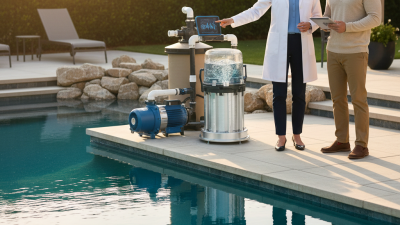
How to Choose the Best Electric Pool Pumps for Your Swimming Pool
-

2025 How to Choose the Best Electric Pool Pumps for Your Swimming Pool
-
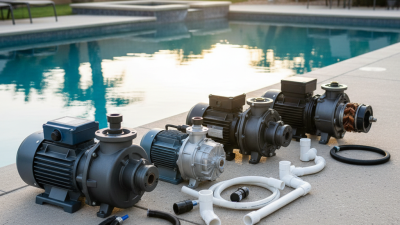
10 Essential Tips for Choosing Swimming Pool Pumps and Motors
-
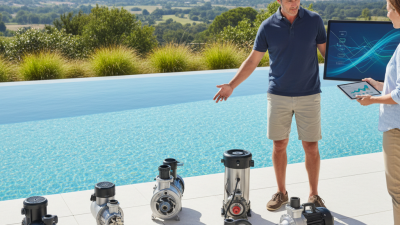
2026 How to Choose the Right Swimming Pool Pumps for Your Needs?
-

2026 Top Swimming Pool Pumps and Motors What You Need to Know?
