
Why Do Global Buyers Choose a Spinning Filter?

Why do global buyers choose a Spinning Filter when many filtration technologies are available? The answer often begins with practical factory experience. In food processing, chemical production, and water treatment, operators need stable filtration with limited downtime. A well-designed Spinning Filter can separate particles while supporting continuous production. Its rotating screen helps reduce surface buildup and maintain a more consistent flow. This matters when a blocked filter can delay filling lines, cleaning cycles, or export schedules. Buyers also examine screen accuracy, housing materials, pressure limits, and cleaning access. Small details matter.

Reliability comes from evidence, not attractive product photos. Experienced purchasers request flow data, test results, material certificates, and clear maintenance instructions. They compare performance under real temperatures, viscosities, and contamination levels. A responsible supplier should explain both strengths and limitations. A Spinning Filter is not perfect for every fluid. Incorrect mesh selection can reduce capacity or increase cleaning frequency. Installation errors can create leaks, even with strong equipment. That part is sometimes overlooked. Global buyers also consider technical support, spare parts, delivery consistency, and compliance with relevant industrial requirements. These factors build confidence across different markets and operating conditions. Still, published specifications may not match every plant. On-site testing remains valuable. The best purchasing decision combines documented performance with operator feedback, careful engineering review, and realistic expectations.
Why Do Global Buyers Choose a Spinning Filter?

What Is a Spinning Filter and How Does It Work?

Why Do Global Buyers Choose a Spinning Filter?

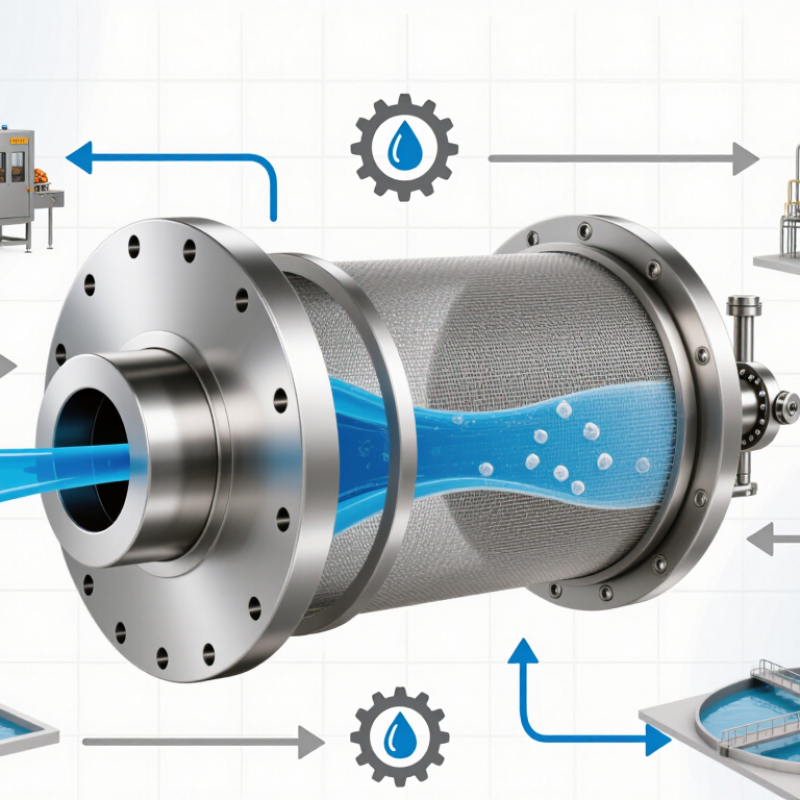
A spinning filter removes suspended solids while fluid moves through a rotating screen or cylindrical mesh. The incoming liquid enters the filter chamber, while the screen turns at a controlled speed. Clean liquid passes through the openings. Larger particles remain on the screen and move toward a collection area.

In practical plant operation, rotation helps limit surface buildup and supports steadier flow. Some designs also use centrifugal force to separate heavier particles. Performance depends on mesh size, flow rate, particle shape, and fluid temperature. A fine screen may improve separation, but it can clog faster. This trade-off is easy to overlook. Buyers often choose spinning filters because they support continuous processing, occupy limited floor space, and reduce frequent manual cleaning. They can serve water treatment, food processing, chemical production, and other controlled industrial applications.

Tips: Match the screen opening with real particle data, not assumptions. Check pressure difference and outlet flow during operation. Clean the collection area regularly. A filter may look efficient while hidden buildup reduces capacity. Keep maintenance records, too. They reveal problems earlier. Start with a small trial when the fluid changes. Mistakes happen. 天天中彩票不

Which Industries and Materials Use Spinning Filters?

Why Do Global Buyers Choose a Spinning Filter?

Which Industries and Materials Use Spinning Filters?

Spinning filters serve industries that convert molten polymers into continuous fibers, filaments, or thin films. Textile producers use them for polyester, nylon, polypropylene, and polyethylene materials. These filters remove gels, metal particles, unmelted pellets, and carbonized residue before extrusion. Cleaner melt flow helps reduce broken filaments and uneven fiber thickness.

Recycled polymer processors also depend on spinning filters. Their feedstock may contain dust, labels, paper fragments, or degraded plastic. Mechanical recycling lines often process PET, PP, and PE from collected packaging or industrial waste. Filter selection depends on viscosity, contamination level, temperature, and required output. A filter that works well for virgin polymer may clog quickly with recycled material.

Nonwoven fabric makers use filtered polypropylene and polyester melts for hygiene products, medical textiles, and filtration media. Technical textile plants may process aramid, nylon, or blended polymers under tighter temperature controls. Some packaging film producers use similar filtration equipment, especially when small impurities could create weak points.

Real production is less tidy.

Operators still inspect pressure changes, screen condition, and melt appearance. In my view, buyers sometimes focus too heavily on micron ratings. That can be misleading. A finer screen is not always better, because excessive resistance can raise pressure and damage sensitive polymers. Practical trials remain important, especially when material quality changes between batches. Even experienced teams may need to adjust temperature, filtration area, and replacement intervals after installation.

Why Do Global Buyers Prefer Spinning Filters?

Global buyers often prefer spinning filters because they support steady filtration with less manual interruption. A rotating screen or drum removes suspended particles while process fluid continues moving. This design suits production lines that cannot pause frequently. Operators can inspect the discharge area, check pressure changes, and adjust cleaning intervals. In many facilities, that means fewer unexpected stoppages and more predictable maintenance planning.

The preference is practical, not universal. Spinning filters can handle continuous workloads, but their performance depends on mesh size, fluid viscosity, and particle shape. A fine screen may improve clarity while increasing pressure loss. A rougher screen may protect flow but allow smaller particles through. This trade-off is easy to underestimate. Real operating conditions should guide the selection, rather than a catalogue number alone.

Tips: Ask for test data using your actual fluid and particle load. Check cleaning access, seal durability, spare-part availability, and power consumption. Observe pressure readings during the first weeks of operation. Keep a simple maintenance log. It can reveal patterns that initial calculations miss. Also, do not assume the largest filter is automatically the best choice. Space, flow rate, and cleaning arrangements matter. A technically impressive unit may still create problems if workers cannot reach the screen safely.

Why Do Global Buyers Prefer Spinning Filters?

Spinning filters are widely selected for continuous solid–liquid separation because they combine automatic operation, stable filtration performance, reduced manual cleaning, and efficient use of installation space. The comparison reflects commonly reported selection priorities in industrial filtration applications and is intended as an industry reference rather than company-specific data.

How Do Spinning Filters Compare with Alternative Filtration Systems?

Global buyers compare spinning filters with cartridge, sand, and membrane systems by looking beyond removal ratings. A spinning filter separates suspended solids through a rotating screen or basket. It can operate continuously, while an automated rinse removes captured debris. This reduces manual filter changes in many industrial water lines.

The 2024 U.S. EPA Drinking Water Infrastructure Needs Survey estimates that the United States needs about $625 billion in drinking-water investment over 20 years. Such pressure makes operating cost important. Compared with cartridge filters, spinning units may reduce disposable waste and labor. Compared with sand filters, they usually require less floor space and avoid large media beds. They also produce less pressure loss when correctly sized. That advantage is not universal.

Membrane systems still provide stronger control over dissolved salts, microorganisms, and very fine particles. A spinning filter mainly targets suspended solids. The UNESCO World Water Development Report 2024 notes that global water demand has risen by roughly 1% annually since the 1980s. Efficient pretreatment therefore matters, especially before membranes. In practice, a spinning filter can extend membrane life by removing coarse particles first. Field performance depends on screen size, flow changes, water temperature, and cleaning frequency. A poorly selected screen will clog quickly. Sometimes, it will not. Buyers should request pilot data, pressure-loss records, and cleaning-water consumption before making a final comparison.

What Factors Should Buyers Consider Before Choosing One?

Before choosing a spinning filter, buyers should define the working conditions clearly. Product viscosity, temperature, contamination level, and required flow rate all affect performance. A filter designed for clean, low-viscosity material may fail under heavy contamination. That mistake is costly.

Mesh size needs careful evaluation. Finer mesh can improve filtration, but it may increase pressure and cleaning frequency. Buyers should also check the filter’s material compatibility, sealing method, and maximum operating temperature. In practical factory trials, small seal weaknesses often become larger problems after repeated heating and cooling. Ask for test data, pressure-drop curves, dimensional drawings, and documented inspection procedures. Good evidence matters more than polished claims.

Maintenance should influence the decision from the beginning. Can operators replace screens safely? Are spare parts easy to obtain? Does the design allow cleaning without long production stops? Buyers should calculate energy use, labor, replacement parts, and expected service life, not only the purchase price. A lower-cost unit may become expensive after several shutdowns. It happens.

Supplier experience also deserves close attention. Look for suppliers who can explain installation, filtration limits, and troubleshooting steps in specific terms. Request references from similar processing conditions when possible. Independent testing is helpful, although it may not match every factory perfectly. No selection is flawless. A short pilot run can reveal pressure instability, difficult cleaning, or unexpected material loss before full-scale investment.

Call (416) 661-5667