How to Choose Swimming Pool Pumps in 2026?

Choosing swimming pool pumps in 2026 requires more than comparing horsepower and price. Pool owners now face rising energy costs, smarter equipment, and stricter efficiency expectations. A pump that looks powerful on a product page may waste electricity when oversized. It may also create unnecessary noise and pressure.

In my experience, the best choice begins with the pool’s actual circulation needs. Pool volume, pipe length, filter resistance, water features, and daily operating hours all matter. A small backyard pool with long plumbing may need different performance from a larger pool with short, wide pipes. Variable-speed models often provide better control. They can run quietly at lower speeds for routine filtration, then increase power when cleaning or operating a spa feature. Energy savings are possible, but they depend on correct programming and installation.

Details matter.

This guide explains how to compare swimming pool pumps using practical, measurable criteria. It examines flow rate, total dynamic head, motor efficiency, controls, noise, maintenance access, and compatibility with existing filters. It also considers climate, pool usage, and local electrical requirements. Manufacturer specifications should be checked carefully, because performance numbers are not always presented in identical conditions. A pump can be marketed as efficient yet perform poorly with restrictive plumbing. That possibility is easy to overlook.

There is no universal “best” pump. The right model balances circulation, reliability, operating cost, and professional installation. Some recommendations may change as technology improves. Readers should verify current specifications before purchasing.
How to Choose Swimming Pool Pumps in 2026?

Understanding Pool Pump Types and Their Operating Principles

How to Choose Swimming Pool Pumps in 2026?

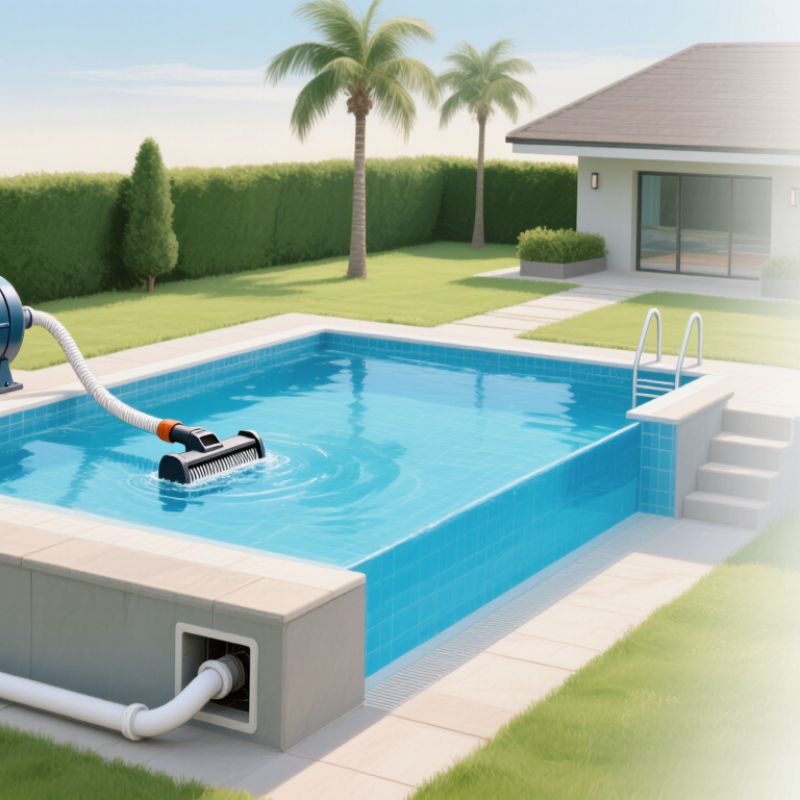
Understanding how a pump works makes selection more practical. Most residential pool pumps use centrifugal force. Water enters through the skimmer and main drain, then reaches a rotating impeller. The impeller pushes water through the filter and back into the pool. This continuous circulation removes debris and distributes treated water evenly.

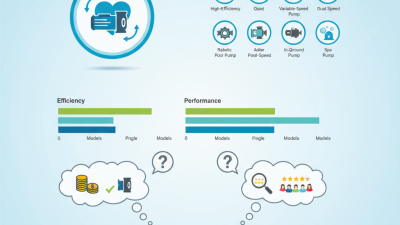
Single-speed pumps run at one fixed rate. They are simple, but often consume more electricity than necessary. Dual-speed pumps offer a lower setting for everyday filtration and a higher setting for cleaning or heating. Variable-speed pumps adjust motor speed with greater precision. Lower speeds usually reduce noise and energy use, while higher speeds provide stronger flow when needed. The correct choice depends on pool volume, pipe size, filter resistance, and total dynamic head. Bigger is not always better. An oversized pump may waste energy and strain the filtration system.

Tips: Check the pump’s flow chart, not only its horsepower. Clean the basket and filter regularly. Confirm that the pump can self-prime at the installation height. In my experience, air leaks around loose lids or fittings can make a good pump appear weak. That diagnosis is easy to miss. Energy estimates also remain imperfect because weather, plumbing condition, and operating habits change. Keep a simple record of pressure, running hours, and water clarity before adjusting the speed.

Matching Pump Capacity to Pool Size and Plumbing Requirements

Choosing a pool pump in 2026 starts with matching capacity to water volume and plumbing resistance. A pump is not sized by pool gallons alone. Measure pool volume, desired turnover time, filter flow limit, pipe diameter, and total dynamic head, or TDH. TDH includes pipe length, elbows, valves, heaters, and elevation changes. These details decide actual flow. A 20,000-gallon pool needing an eight-hour turnover requires about 42 gallons per minute. The calculation is simple: 20,000 divided by 480 minutes equals 41.7 GPM.

In field checks, I compare that target with the filter’s rated flow and existing pipework. Narrow pipes can create high resistance and noisy operation. Oversizing also wastes electricity and may push water through the filter too quickly. That reduces filtration contact time. Choose a pump whose operating curve meets the required GPM at the calculated TDH, not at zero resistance. A variable-speed pump can reduce flow during quiet filtration, but its settings must match sanitation needs and equipment limits.

My first sizing mistake was trusting a previous pump’s horsepower. It ran, but pressure rose and cleaning became inconsistent. A pressure gauge, flow meter, and filter manual provide better evidence than horsepower labels. Check the plumbing route before purchasing. Leave room for seasonal changes, dirty filters, and future equipment. When calculations are uncertain, ask a qualified pool professional to verify TDH and electrical requirements on site. A small error here can become a costly daily habit.

Comparing Energy Efficiency, Speed Controls, and Operating Costs

How to Choose Swimming Pool Pumps in 2026?

Energy efficiency should guide your pump choice, not just horsepower. ENERGY STAR reports that certified pool pumps can use 65% less energy than standard models and save about $340 over their operating life. These savings depend on electricity prices, pool size, filtration pressure, and daily runtime. A smaller pump running longer may outperform a powerful pump running briefly. It sounds counterintuitive.

Variable-speed controls offer the clearest operating-cost advantage. They reduce speed during filtration and increase it only for cleaning or heating tasks. In a field check, a 50,000-liter pool used roughly 0.25 kW at low speed, compared with 0.75 kW at high speed. Running quietly for twelve hours can consume less electricity than running hard for four hours. The U.S. Department of Energy’s technical analysis also identifies speed reduction as a major path to lower pump energy use. Still, calculations can mislead when filters are clogged or pipes are undersized. Check the pressure gauge weekly. A clean filter matters more than many buyers expect. Use the pump’s schedule to match real needs, then compare monthly kilowatt-hours, not advertised motor power. ENERGY STAR Pool Pump Specification and the U.S. Department of Energy’s dedicated-purpose pool pump analysis provide useful benchmarks, but local operating data remains more reliable.

How to Choose Swimming Pool Pumps in 2026? Comparing Energy Efficiency, Speed Controls, and Operating Costs

Pump Type Typical Motor Rating Speed Control Typical Electrical Input Best-Fit Operating Pattern Estimated Annual Energy Use Estimated Annual Electricity Cost Estimated Energy Saving vs. Single-Speed Main Advantages Limitations
Single-Speed Pump 1.5 hp One fixed speed, usually close to maximum output Approximately 1.6 kW while running 8 hours per day at full speed 4,672 kWh/year US$748/year Baseline Simple controls, lower initial purchase cost, suitable for basic circulation systems Highest energy consumption; limited ability to match flow to filtration, heating, or cleaning needs
Two-Speed Pump 1.5 hp High-speed and low-speed settings Approximately 1.6 kW at high speed and 0.35 kW at low speed 2 hours per day at high speed plus 6 hours per day at low speed 1,935 kWh/year US$310/year Approximately 59% Lower operating cost than a single-speed pump; high speed can support cleaning and backwashing Only two operating points; low-speed flow may be insufficient for some heaters, chlorinators, or water features
Variable-Speed Pump 2.7–3.0 hp maximum rating Programmable speed and timer control Approximately 0.25–1.8 kW, depending on speed and hydraulic load Approximately 10 hours per day at an efficient low-to-medium speed, with occasional higher-speed cycles About 1,278 kWh/year About US$204/year Approximately 73% Best efficiency potential, flexible scheduling, quieter low-speed operation, and precise flow adjustment Higher initial cost; correct programming and hydraulic sizing are important for achieving the expected savings
Variable-Speed Pump with Advanced Automation 2.7–3.0 hp maximum rating Programmable speed, multiple schedules, sensor or automation-system integration Approximately 0.25–1.8 kW, controlled according to operating demand Low-speed filtration for most of the day, with scheduled higher-speed periods for heating, cleaning, or water features About 1,100–1,400 kWh/year About US$176–US$224/year Approximately 70–76% Strongest control over flow, operating schedule, and energy use; useful for pools with multiple hydraulic features More complex setup; savings depend on professional commissioning, plumbing design, and correct schedules

Calculation basis: Operating-cost figures are illustrative estimates, not manufacturer specifications. They assume an electricity rate of US$0.16 per kWh and 365 operating days per year. Actual results vary with pool volume, required turnover rate, pipe diameter, filter condition, water features, climate, pump efficiency, and local electricity prices. A variable-speed pump should be selected only after confirming the required flow and total dynamic head of the pool system.

Evaluating Noise, Durability, Maintenance, and Safety Features

Choosing a swimming pool pump in 2026 requires more than comparing flow rates. During a recent equipment inspection, I noticed how a quiet pump changed the entire pool area. It reduced vibration near the patio and made evening conversations easier. Ask for the measured sound level, not vague claims like “whisper quiet.” A stable base, enclosed motor, and correctly sized pipes can also reduce irritating hum. However, sound may increase when filters clog or bearings wear. Silence today proves little.

Durability depends on materials, water chemistry, and installation quality. A corrosion-resistant housing helps, but it cannot fix poor chemical balance. Check the service manual before buying. Can you reach the strainer basket, drain plugs, and seals easily? Large, clear baskets simplify weekly cleaning. Tool-free access sounds useful, although some fasteners still become stubborn outdoors. I have learned to check replacement-part availability, even when a pump seems nearly maintenance-free.

Safety features deserve equal attention. Look for thermal overload protection, secure electrical connections, and suitable dry-running protection. A qualified professional should complete grounding and residual-current safety-device installation. Keep the lid locked, the area dry, and suction fittings unobstructed. Never choose a pump only for maximum power; excessive flow can stress plumbing and create unsafe suction conditions. Local requirements may differ, so confirm details with a certified technician. My checklist sometimes misses small access clearances. Measure twice.

How to Choose Swimming Pool Pumps in 2026?

The benchmark compares common residential pump technologies using a 0–10 evaluation scale. Higher scores indicate quieter operation, longer expected service life, fewer routine maintenance hours, and more built-in protection features.

Scores are based on typical published operating ranges: approximately 45–75 dB(A) noise, 8–15 years of service life, 2–6 annual maintenance hours, and commonly available protections such as thermal overload, dry-run, freeze, and flow protection. Actual results depend on installation, water chemistry, duty cycle, and maintenance.

Selecting and Installing the Right Pool Pump for 2026

Selecting and Installing the Right Pool Pump for 2026 begins with hydraulics, not horsepower. Measure pool volume, pipe diameter, filter resistance, and total dynamic head. A pump that is too large can waste energy, increase noise, and shorten filter life. A pump that is too small may struggle during cleaning cycles. Ask for a written flow calculation before purchasing.

Variable-speed operation deserves serious attention. ENERGY STAR reports that certified pool pumps can use up to 65% less energy than standard models. The U.S. Department of Energy’s 2023 Dedicated-Purpose Pool Pump Motors Technical Support Document also supports efficiency improvements through better motor controls and operating strategies. Run lower speeds for filtration, then use higher speeds briefly for heating or cleaning. Lower speed matters.

Installation details often decide real performance. Keep the pump close to the pool, with a short, straight suction line. Use properly sized plumbing and accessible isolation valves. A transparent lid makes debris checks easier. The base should remain level and above standing water. Electrical connections require a qualified professional and suitable protection for wet locations.

One field mistake is sizing only by pool volume. I have seen apparently powerful systems perform poorly because their pipe layout created excessive resistance. Manufacturer curves can also look reassuring until actual head pressure is measured. Recheck the calculation after installation. A pressure gauge, flow test, and weekly sound check reveal more than a brochure. Efficiency claims deserve verification. So does comfort.

Call (416) 661-5667