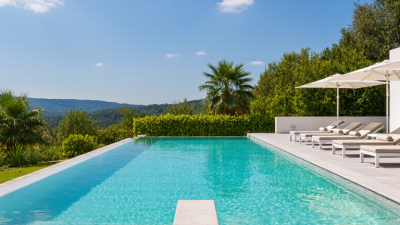
Why Choose a Water Pool for Your Project?

A water pool can transform an ordinary project into a place for movement, recovery, connection, and calm. It offers more than visual appeal. Carefully designed water supports swimming, hydrotherapy, recreation, and everyday relaxation. The surface catches daylight, while shallow steps and textured edges improve access for different users. However, choosing a water pool should involve more than copying attractive images from a brochure.

Dr. Michael Beach, a former CDC healthy swimming expert, said, “Healthy swimming is a shared responsibility.” That principle belongs at the center of every water pool decision. Reliable circulation, filtration, drainage, and water testing protect users and support long-term performance. Designers should also consider climate, available space, energy demand, maintenance access, and changing user needs. A pool that looks impressive but consumes excessive resources may become a costly burden. That mistake is common.

The strongest projects begin with honest questions. Who will use the pool? How often? What could go wrong during busy periods? A family pool may need broad visibility and gentle entry points. A wellness facility may require stable temperatures and precise hygiene controls. Commercial projects demand even stricter planning. Material choices matter too, from slip-resistant paving to durable interior finishes. Small details become noticeable when wet feet, crowded decks, and daily cleaning are involved.

A water pool is not automatically the right solution. It requires investment, supervision, and ongoing care. Yet, when its purpose is clear, it can become a durable and meaningful feature. The best result balances beauty, safety, accessibility, operating costs, and real human experience. Sometimes, simpler is wiser.
Why Choose a Water Pool for Your Project?

Understanding What a Water Pool Is and How It Functions

A water pool is an engineered basin designed to hold, circulate, and manage water. It may serve as a cooling reservoir, decorative feature, emergency storage area, or process-water system. Unlike a simple pond, it usually includes pumps, filters, drains, sensors, and controlled water levels. Its function depends on the project’s purpose, climate, and expected use.

In a well-designed system, water moves through planned zones instead of sitting still. A pump sends water through pipes, while filters remove leaves, sediment, and other particles. Overflow channels help prevent flooding during heavy rain. Sensors can monitor temperature, depth, and water quality. These details support safer operation and more predictable maintenance. Small details matter.

For example, a pool near a building may use dark stone edges that absorb heat, while shaded sections reduce evaporation. Service access should remain clear, even when landscaping grows around the basin. Poor drainage can create standing water beside the structure. That problem is easy to overlook. Regular inspection is still necessary, because no pool system cleans itself perfectly. Designers should also calculate water loss, energy use, cleaning frequency, and seasonal changes before construction. A visually attractive pool may perform poorly if these practical demands receive little attention. Some plans will need revision after real weather and usage patterns reveal weaknesses.

Identifying the Main Benefits of Using a Water Pool

A water pool can give a project a stronger sense of space, movement, and purpose. Its reflective surface can make a compact courtyard appear wider. In public areas, gentle water movement may soften traffic noise and create a calmer atmosphere. A pool can also support cooling strategies when its design allows airflow across the surface. The visual effect is immediate. Visitors notice it.

The main benefits depend on careful planning. Pool size, depth, circulation, and surrounding materials affect performance and maintenance. A shallow pool may require more frequent cleaning because debris remains visible. Evaporation can increase water use in hot or windy locations. This is often underestimated. Reliable design should include filtration access, safe edges, drainage, and clear maintenance routes. Local climate and site conditions must guide every decision, not attractive images alone. A water pool is not automatically sustainable.

Tips: Test the site before construction. Check sunlight, wind, drainage, and nearby trees. Choose durable surfaces with slip resistance. Keep equipment reachable for inspections. Record water levels during different seasons. Small oversights become expensive later. Allow room for adjustment, because real sites rarely behave exactly as planned.

Evaluating Site, Design, and Water Management Requirements

A water pool can create a strong visual anchor, but the site must work before the design looks impressive. Study sunlight, wind direction, soil conditions, drainage, and access for maintenance. A shaded pool may feel comfortable, yet nearby trees can increase leaf loading and filtration demand. The World Health Organization estimates about 300,000 drowning deaths occur globally each year, making depth changes, visibility, barriers, and controlled access essential design decisions. WHO, Global Status Report on Drowning, 2024.

Water management begins with the daily operating reality. Plan for filtration, disinfection, pH control, overflow handling, and safe equipment access. The CDC’s Model Aquatic Health Code stresses continuous monitoring, adequate circulation, and documented maintenance procedures. These controls protect water quality, but they also affect plant-room size and operating costs. Small details matter. A poorly placed drain can complicate cleaning for years.

Evaporation deserves attention. The U.S. Department of Energy reports that pool covers can reduce evaporation by up to 95 percent. A cover may therefore lower water use, heating demand, and chemical loss. It also needs storage space and regular handling. I have seen attractive pool concepts fail because operators could not reach the filters easily. The first layout is rarely the best one. Recheck maintenance routes, emergency access, seasonal weather, and future water restrictions before approving the final design.

Comparing Water Pool Options for Different Project Goals

Why Choose a Water Pool for Your Project?

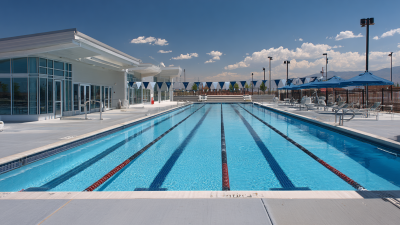
Water pool choices should match the project’s real purpose. A compact plunge pool suits wellness spaces, where quiet recovery matters more than capacity. A lap pool serves training goals, but it needs clear length, consistent depth, and strong circulation. A leisure pool creates visual appeal and social activity, although it usually demands more deck space and supervision.

Safety must guide the design. The World Health Organization’s Global Status Report on Drowning 2024 estimates more than 300,000 drowning deaths occurred in 2021. This makes visibility, controlled access, drainage, and trained supervision essential. The CDC’s Model Aquatic Health Code also addresses circulation, disinfection, air quality, and facility operation. These details affect comfort and long-term maintenance. A beautiful pool can still perform poorly.

Tips: Define the main user group before choosing the pool type. Measure peak occupancy, not average attendance. Compare heating, filtration, water replacement, and staffing costs. Ask engineers for lifecycle estimates. Test circulation zones during commissioning. Do not rely only on concept images. Early assumptions often need revision.

Planning Installation, Maintenance, Safety, and Long-Term Costs

Why Choose a Water Pool for Your Project?

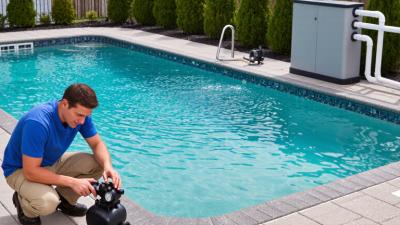
Planning a water pool starts with the site, not the shape. Soil conditions, drainage, sunlight, and access for construction can affect every later decision. A qualified pool designer should check these details before excavation begins. On one project, the equipment room was placed too far away. That choice increased pipe runs, energy use, and servicing time. It looked efficient on paper, but daily operation proved otherwise.

Installation quality strongly influences maintenance and safety. Use correctly sized circulation equipment, secure electrical connections, slip-resistant surfaces, and clearly marked depth changes. Include barriers, controlled access, and suitable lighting where children or visitors may enter. Water testing should follow a regular schedule, not only when the pool looks cloudy. Check disinfectant levels, pH, filtration, leaks, and water temperature. Small faults become expensive quickly.

Long-term costs include cleaning, chemical treatment, heating, electricity, repairs, and eventual equipment replacement. Request a realistic maintenance estimate before approving the design. Keep service records and inspect covers, drains, ladders, and surrounding paving. I underestimated repair time on an earlier plan. That was a useful warning. A beautiful pool is not automatically a practical one. Reconsider choices that reduce the initial price but make safe operation harder.

Why Choose a Water Pool for Your Project? — Planning, Installation, Maintenance, Safety, and Long-Term Costs
Project Area Planning Dimension Practical Benchmark or Data Project Implication Recommended Verification
Planning Pool size and water volume An 8 m × 4 m pool with an average depth of 1.4 m contains approximately 44.8 m³, or 44,800 litres, before accounting for steps and irregular shapes. Water volume determines initial filling requirements, chemical dosing, heating demand, filtration capacity, and future water replacement costs. Confirm the calculated volume with the designer before selecting pumps, filters, heaters, or automatic dosing equipment.
Planning Depth profile Common residential designs combine shallow areas of approximately 1.0–1.2 m with deeper areas of approximately 1.5–2.0 m; diving depths require separate engineering and safety controls. A consistent depth can simplify construction, circulation, cleaning, and heating, while multiple depths may improve usability but increase design complexity. Check local construction rules and avoid assuming that a deeper section is suitable for diving.
Planning Site conditions Groundwater, soil stability, drainage, access for excavation, slope, and proximity to structures can materially change the construction method and cost. A geotechnical review and site survey can reduce the risk of structural movement, water ingress, drainage problems, and construction delays. Obtain a site survey, utility-location report, drainage plan, and written confirmation of required permits.
Installation Construction cost planning A professionally installed residential in-ground pool commonly falls within a broad planning range of approximately US$35,000–US$100,000 or more, depending on location, size, structure, access, finishes, and equipment. The pool shell is only one cost component. Excavation, retaining structures, electrical work, plumbing, paving, fencing, lighting, heating, permits, and landscaping may be additional. Compare at least three itemized quotations that clearly separate included work, allowances, taxes, permits, and exclusions.
Installation Circulation and filtration Residential pool systems are often designed around an approximately 6–8 hour turnover period, although local codes and the engineer’s hydraulic calculations govern. Correct pipe sizing, adequate circulation, and accessible equipment reduce energy use and help distribute disinfectant evenly. Request pump-flow calculations, total dynamic head, pipe diameters, filter capacity, and the proposed operating schedule.
Installation Water heating Heating demand varies primarily with pool surface area, target temperature, outdoor temperature, wind, humidity, insulation, and cover use. A pool cover can reduce evaporation and associated heat loss. Heating equipment should be sized for the local climate and intended season of use rather than pool volume alone. Ask for a heat-loss calculation, expected warm-up time, seasonal energy estimate, and cover specification.
Maintenance Water chemistry For swimming pools, the U.S. Centers for Disease Control and Prevention recommends maintaining pH at 7.0–7.8 and free chlorine of at least 1 ppm; local regulations may require different targets. Balanced chemistry supports disinfectant performance and helps reduce irritation, scaling, corrosion, and damage to finishes or equipment. Test pH and disinfectant regularly with a reliable kit or meter, and follow the chemical manufacturer’s instructions.
Maintenance Routine cleaning and inspection Skimming, emptying baskets, brushing surfaces, checking water level, and inspecting equipment are recurring tasks; cleaning frequency depends on weather, debris, bather load, and filtration performance. A written maintenance schedule helps identify leaks, blocked flow, abnormal pressure, and chemical imbalance before they become expensive repairs. Record test results, filter pressure, equipment run time, water additions, and corrective actions.
Maintenance Water replacement and evaporation Evaporation is site-specific and increases with heat, wind, low humidity, warm water, and high water movement. A cover generally reduces evaporation compared with an uncovered pool. Reducing evaporation can lower water, chemical, heating, and refill-related costs while helping conserve water resources. Measure water loss during a calm, unused period and investigate unexplained loss for leaks before adding chemicals.
Safety Physical barrier The U.S. Consumer Product Safety Commission recommends a four-sided isolation fence at least 4 ft high, with self-closing and self-latching gates; local requirements may be stricter. Separating the pool from the house and surrounding activity areas reduces unsupervised access by children and pets. Confirm barrier height, gate direction, latch position, openings, and inspection requirements with the local authority.
Safety Supervision and emergency readiness Barriers, alarms, covers, and rescue equipment are layers of protection; none replaces active adult supervision or swimming ability. Clear operating rules, visible emergency equipment, and staff or household training improve response readiness. Provide a reaching or throwing aid, maintain emergency contact information, and consider CPR and first-aid training.
Safety Electrical protection Pool electrical installations require bonding, grounding, and ground-fault protection in accordance with the applicable electrical code. Correct electrical design reduces shock risk and protects pumps, lights, heaters, and control equipment. Use a licensed electrical professional and obtain inspection documentation before operation.
Long-Term Costs Operating-cost formula Annual operating cost can be evaluated as: electricity + heating fuel or energy + water and sewer charges + chemicals + routine cleaning + consumables + repairs. Using a consistent cost model makes different designs comparable without relying on brand-specific claims. Request annual kWh or fuel-consumption estimates and apply local utility rates, water tariffs, and labor rates.
Long-Term Costs Equipment service life Service life varies with water chemistry, operating hours, climate, installation quality, and maintenance. Pumps, heaters, lights, seals, controls, and liners may require replacement at different times. A lower initial price may create higher lifetime costs if equipment is inefficient, difficult to access, or unsupported after installation. Collect written warranty terms, replacement-part availability, maintenance access requirements, and expected service intervals.
Long-Term Costs Lifecycle comparison A useful 10-year ownership estimate is: initial project cost + 10 years of operating costs + planned replacements + repairs − residual or resale value, where applicable. Lifecycle analysis highlights the financial effect of insulation, covers, efficient circulation, durable finishes, automation, and accessible equipment layouts. Compare at least three design options using the same pool size, climate assumptions, energy prices, usage pattern, and maintenance standard.
Data note: Benchmarks are general planning references, not a substitute for local building, health, electrical, environmental, or safety requirements. Costs and performance vary by country, climate, site conditions, pool design, usage, and labor rates. Reference points include CDC Model Aquatic Health Code guidance and U.S. CPSC residential pool barrier recommendations.
Call (416) 661-5667