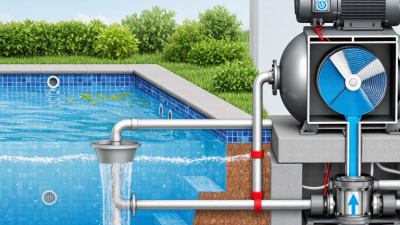
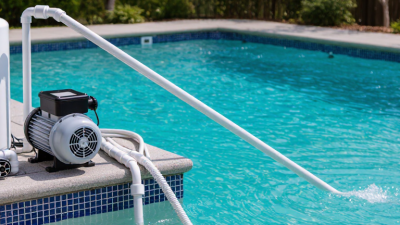
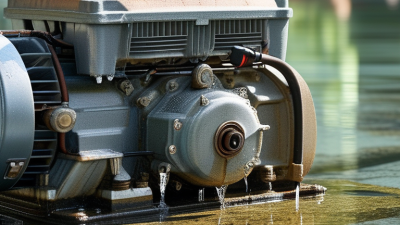
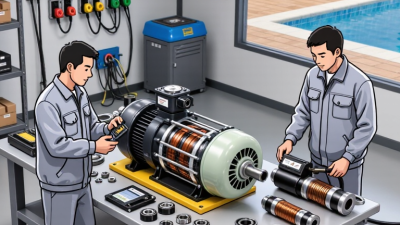
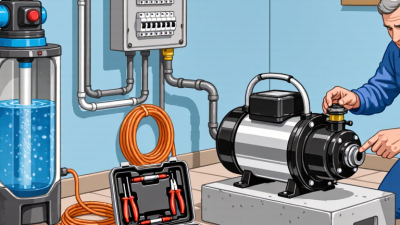
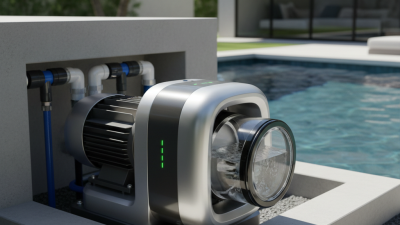
Finding reliable pool motor repair near me should involve more than comparing the lowest service call fee. A motor may hum, overheat, trip the breaker, or leak around the shaft seal. Each symptom points to a different repair path. Replacing a capacitor is not the same as rebuilding bearings or replacing the entire motor.
Energy efficiency also deserves attention. The U.S. Department of Energy and ENERGY STAR identify variable-speed pool pumps as a practical way to reduce electricity consumption compared with traditional single-speed equipment. The Pool & Hot Tub Alliance also emphasizes proper installation, maintenance, and qualified service practices across residential pool systems. These reports support a simple point: skilled diagnosis can protect both performance and operating costs.
Small details matter.
Rudy Stankowitz, a pool-industry educator and author, describes the pump as “the heart of the pool system.” That comparison is useful, although it can oversimplify a complicated repair. A healthy motor cannot compensate for clogged filters, incorrect plumbing, poor voltage, or a worn impeller.
The best local pool motor repair provider should explain the fault clearly. Look for technicians who test voltage, inspect seals, check amperage, and document the repair. Ask about parts, labor coverage, licensing, experience, and warranty terms. A professional should also tell you when replacement is more economical than repair. That answer may disappoint you. It may also prevent another breakdown next month.
This guide compares nearby services using practical evidence, technical competence, transparent pricing, and customer reliability.
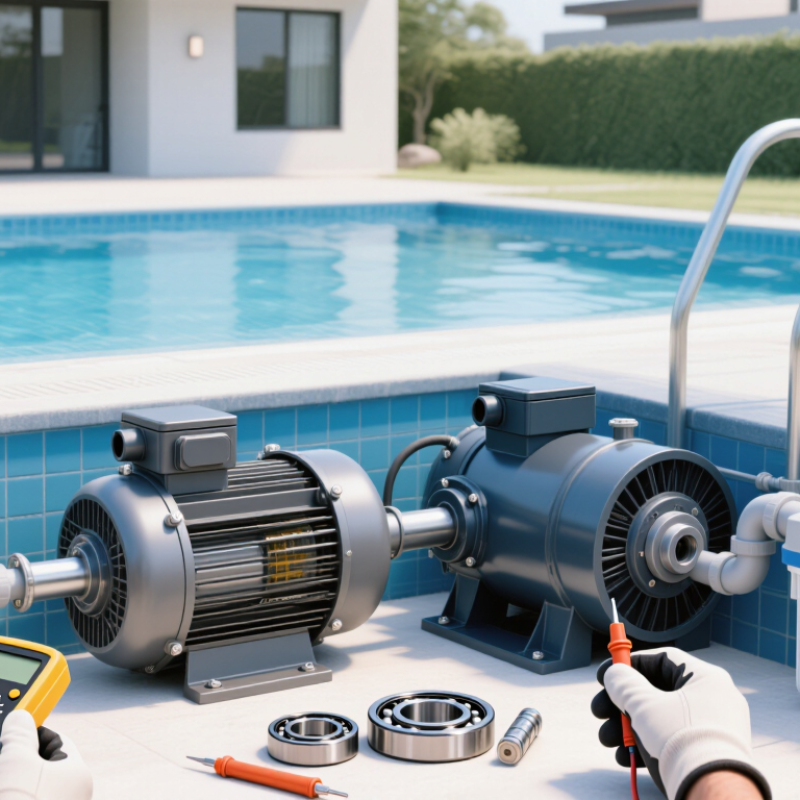
A reliable pool motor diagnosis begins with testing, not guessing. NEMA MG 1 establishes performance and test principles for motors, including voltage, current, temperature rise, insulation, and operating limits. A nearby repair technician should record these values before replacing parts. The U.S. Department of Energy reports that motor-driven systems consume more than half of industrial electricity, showing why small efficiency losses deserve attention.
Voltage imbalance can overheat windings quickly. NEMA guidance commonly treats even a small imbalance as serious because current imbalance may become several times larger. For example, a technician may measure 230 volts across three line pairs, then find one pair noticeably lower. That detail can explain tripped protection, humming, or a hot housing. It is not always a failed motor.
Insulation resistance testing can reveal moisture or aging inside the windings. Locked-rotor current testing can expose mechanical binding, but it should be performed with proper controls. The U.S. DOE’s motor-system assessments also emphasize alignment, airflow, and load conditions, not only electrical readings. A motor may pass one test and still fail under heat beside a wet equipment pad. I have seen clean meter readings mislead inexperienced repairs. NEMA MG 1 provides a technical framework, not a magic verdict. Good service records should include temperature, amperage, shaft noise, capacitor condition, and pump load. Sometimes the pump, not the motor, is the real problem.
Top Pool Motor Repair Services Near Me?
A reliable pool motor diagnosis starts with voltage, insulation, and bearing checks. A technician should compare voltage at the motor terminals with the equipment’s rated requirements. Readings that fluctuate or fall outside specifications can point to a supply problem, loose connection, or failing component. Power must be isolated before internal inspection. Never touch exposed wiring while equipment is energized.
Next comes an insulation test, performed with suitable test equipment after the motor is disconnected. Low insulation resistance may indicate moisture or damaged winding insulation. Pool equipment sits in a humid environment, so a small amount of corrosion around a connection deserves attention. It does not prove the motor is beyond repair. That distinction matters.
Finally, bearing condition can reveal wear before a motor stops. A technician may listen for grinding, check shaft movement, and feel for unusual vibration during a controlled test. Rough rotation or a hot housing can signal trouble, though other faults may cause similar symptoms. I have seen symptoms overlap; that is an easy detail to underestimate. Ask the repair service to explain each test result, note the measured values, and identify whether repair or replacement is warranted.
The chart compares example field readings with common screening limits: a 230 V motor supply, insulation resistance above 1 MΩ, and bearing temperature below 80°C. Always confirm the motor nameplate and manufacturer service requirements before repair.
Step 1: verify voltage is close to the motor’s rated supply. Step 2: test insulation resistance with the motor isolated from power. Step 3: inspect bearing temperature and noise; excessive heat can indicate lubrication or bearing problems.
Top Pool Motor Repair Services Near Me? Verify GFCI Protection at the NEC 680 Standard of 5 mA Trip Current
A qualified pool motor technician should test GFCI protection before opening the motor housing. NEC Article 680 generally requires Class A GFCI protection for many residential pool pump motors. These devices are designed to interrupt power near the five-milliampere leakage level. The actual trip range is commonly about 4–6 mA under applicable product standards. That small current can still create a dangerous shock path through wet skin.
Ask the technician to document the GFCI test, measured voltage, grounding continuity, and motor insulation condition. The test button only confirms basic operation. A calibrated tester provides better evidence. NFPA reported an average of 32,620 U.S. home fires involving electrical distribution and lighting equipment each year from 2016–2020. Pool equipment represents only part of that risk, but moisture increases the consequences of wiring defects. The motor enclosure should remain dry and properly bonded.
A local repair professional should inspect damaged conduit, loose terminals, corroded bonding conductors, and undersized wiring. The service panel, disconnect, and receptacle also require attention. Local inspection rules may add requirements beyond NEC language. I have seen homeowners replace a noisy motor while ignoring a failing GFCI. That approach saves little. If the GFCI trips repeatedly, do not bypass it or keep resetting it. Ask for fault testing, written readings, and an explanation of any recommended repair.
When searching for pool motor repair near you, ask the technician to compare your current single-speed motor with a variable-speed option. A single-speed motor runs at full power, even when your pool only needs gentle circulation. A variable-speed motor can run longer at lower speeds, which often uses less electricity and may reduce noise. ENERGY STAR reports that certified pool pumps can save nearly 70% in energy costs compared with standard pumps. Your actual savings will depend on pump size, operating hours, plumbing, and local electricity rates. Up to 65% is a reasonable target, not a guarantee.
Ask for an estimate based on your pool’s measured flow needs, not just the motor’s horsepower. The U.S. Department of Energy’s pool pump efficiency standards recognize that properly sized, efficient pumps can cut energy use. A technician should also inspect the impeller, seals, and electrical connections; a new motor cannot fix a clogged filter or leaking line. Small details matter. Request a written comparison of repair costs, expected energy use, and warranty coverage before choosing. I’d be cautious about any quote promising exact savings without checking your system. That part is easy to overlook.
| Comparison | Single-Speed Motor | Variable-Speed Motor | What to Ask a Repair Technician |
|---|---|---|---|
| How it operates | Runs at one fixed speed whenever switched on. | Allows the pump to run at different speeds to suit circulation, cleaning, or other tasks. | Can the existing pump or controller support the proposed motor? |
| Energy use | Uses its rated power while running; energy use depends on motor size and run time. | Often uses less power at reduced speeds. Actual savings depend on the pool, plumbing, schedule, and electricity rate. | Can you estimate energy use using my current schedule and local electricity rate? |
| Illustrative energy-cost example | At 1.5 kW for 8 hours daily and $0.16/kWh: about 12 kWh per day, or $701 per year. | At 0.525 kW for 12 hours daily and $0.16/kWh: about 6.3 kWh per day, or $368 per year—about 48% less in this example. | These figures are illustrative, not a guaranteed savings estimate. Ask for a calculation based on your pool and operating plan. |
| Common repair checks | Technicians may inspect power supply, wiring, bearings, ventilation, and the start capacitor where fitted. | Technicians may inspect power supply, wiring, motor bearings, drive electronics, cooling, and error codes. | Will you diagnose the fault before recommending a motor or pump replacement? |
| Typical warning signs | Humming, unusual noise, overheating, tripped breakers, or failure to start may indicate a fault. | Fault codes, speed-control problems, unexpected shutdowns, unusual noise, or failure to start may indicate a fault. | What is included in the diagnostic visit, and will I receive an itemized estimate before work begins? |
| Repair or replacement decision | A repair may be appropriate if the fault is limited and compatible parts are available. | A drive or motor repair may be possible; compatibility and parts availability should be checked. | Please compare the repair cost with replacement cost, warranty, and expected energy use. |
| Choosing a local service provider | Service quality, parts availability, and pricing vary by location and equipment. Verify relevant licensing where required and ask about experience with your pump type. | Confirm travel or diagnostic fees, labor and parts warranty, appointment availability, and whether the written quote includes testing after repair. | |
Energy example uses assumed power, operating hours, and electricity rate; it is not a prediction for every pool. Savings of up to 65% may be possible in some operating situations, but results depend on system design and usage.
When searching for pool motor repair services near you, compare more than the quoted price. Ask whether the repair comes with a written warranty, and check what it covers: parts, labor, or both. A short warranty may be reasonable for a minor adjustment, but a motor replacement should come with clear terms. Read the exclusions carefully. Water damage or electrical problems may be treated differently. Keep the estimate and warranty together; details are easy to forget after a busy service visit.
Verify that the technician holds the required local license for the work being performed, and ask about relevant training and insurance. Requirements vary by location, so a quick call to your local licensing office can help confirm credentials. Then ask when the technician can arrive and whether that window is firm. A pool motor that hums, trips a breaker, or runs hot may need prompt attention, but avoid diagnosing it yourself around electrical equipment. Ask what checks will be done before repairs begin, and request updates if parts are delayed. Fast is useful. Clear is better. I would not choose solely by response time; a rushed visit with vague warranty terms can leave important questions unanswered.